
Last updated September 25, 2026
Non-destructive entry first, always - and we re-key Schlage, Kwikset, and Baldwin locks on the spot while you watch
You get a price before we start. It does not change when we arrive. No surprises.
Commercial Locksmith Maintenance Checklist for Marietta Homeowners
A Grade 1 commercial lockset is rated for 250,000 cycles. Without lubrication and strike-plate alignment checks every six months, most fail before 80,000 in a high-traffic Marietta storefront. This Commercial Locksmith services guide is written for the small business operator, the medical practice manager, and the retail tenant who treats commercial hardware like a residential deadbolt and pays for that mistake when a cylinder seizes on a Tuesday morning. You’ll learn inspection intervals tied to door traffic, not calendar months; the specific maintenance records your insurer expects; and why Marietta’s humidity demands frame-alignment checks that inland Georgia counties simply don’t.
Quick Answer
Commercial lock maintenance in Marietta should include quarterly lubrication of high-traffic cylinders, biannual strike-plate and frame-alignment checks, annual master key system audits, and semiannual access control battery and credential testing. A Grade 1 lockset in a 200-cycle-per-day Marietta retail location needs inspection at 50,000 cycles, roughly every eight months, not once yearly. Documentation of each visit, including photos and written scope, protects against liability claims and satisfies commercial insurance requirements in Cobb County.
Table of Contents
- Cycle-Count Logic: Why Traffic Dictates Inspection Intervals
- Lubrication and Cylinder Care for Marietta’s Climate
- Strike Plate and Door Frame Alignment: Humidity and Wood Frame Expansion
- Master Key System Audit: Employee Turnover and Security Gaps
- Access Control Battery and Credential Checks
- Documentation Standard: What a Maintenance Record Must Contain
- Commercial vs. Residential Hardware: The Maintenance Gap
- Common Mistakes to Avoid
- When to Call a Professional
- Frequently Asked Questions
Cycle-Count Logic: Why Traffic Dictates Inspection Intervals
Calendar-based maintenance fails commercial hardware. A back-office door at a Marietta professional services firm might see six cycles daily. A pharmacy entrance on Roswell Road sees four hundred. Both locks carry the same Grade 1 rating, but their maintenance needs diverge radically.
Here’s how we calculate inspection intervals at Commercial Locksmith in Marietta:
- Count daily cycles. One cycle equals one complete open-and-close. Count for three representative days and average.
- Multiply by 250 working days. Most Marietta businesses operate 250 days annually, excluding holidays and owner closures.
- Set inspection at 25% of rated cycles. For a 250,000-cycle Grade 1 lockset, that’s 62,500 cycles. At 200 cycles daily, inspect every 8.3 months. At 50 cycles daily, inspect every 33 months, though we still recommend annual review for environmental factors.
- Log the count and date. The next inspector needs this baseline.
We’ve serviced locks in East Cobb medical plazas that reached 100,000 cycles in fourteen months with zero lubrication. The pins were galling. The keyway showed bronze-colored wear dust, a clear signal of metal-on-metal friction. A $12 maintenance visit would have prevented a $340 cylinder replacement and two hours of locked-patient-records downtime.
The Novak Lock & Security Marietta home approach applies Haven Standard Clause 3: every maintenance visit includes a written cycle estimate, the technician’s observed condition, and the next recommended inspection date. No guesswork. No “call us in a year” vagueness.
Lubrication and Cylinder Care for Marietta’s Climate
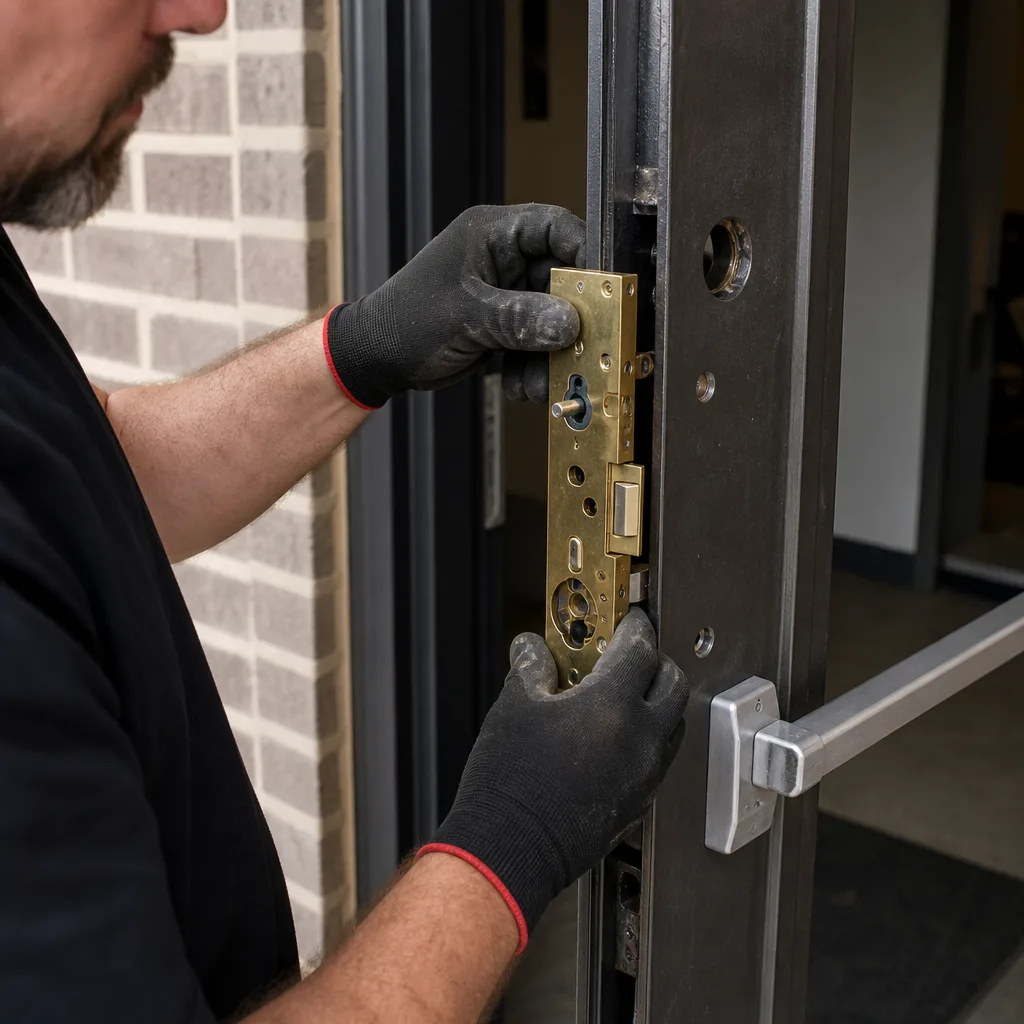
Marietta’s humidity averages 68% annually, with summer peaks above 80%. Moisture migrates into keyways, accelerates pin corrosion, and turns dry graphite lubricant into a gritty paste that abrades rather than protects.
We specify Teflon-based dry lubricant for commercial cylinders in Cobb County, applied with a precision needle applicator, not the aerosol cans sold at hardware stores. Aerosol propellants leave residue. In humid conditions, that residue attracts airborne particulate, particularly the red clay dust common to north Georgia construction zones. The result is a cylinder that feels smooth for three weeks, then drags, then seizes.
Quarterly lubrication protocol:
- Remove the cylinder if the lock design permits; otherwise, apply through the keyway with the key partially inserted
- Apply four drops of Teflon dry lube, cycle the key ten times, wipe excess from the bow
- Inspect the key blade for discoloration; green or white oxidation indicates moisture intrusion requiring cylinder removal and internal cleaning
- Photograph the keyway with a borescope camera; document any scoring, pitting, or foreign material
- Record the product batch number and application date on the maintenance log
For high-security cylinders, Mul-T-Lock and Abloy specify manufacturer-approved lubricants. Using a generic product voids the warranty and can damage the sidebar mechanism or telescoping pin systems. We’ve replaced three Abloy Protec2 cylinders in Marietta office buildings where a maintenance contractor applied standard graphite. The repair cost exceeded $900 per door. The lubricant cost difference was $8.
Schlage Primus and Sargent Signature cylinders require similar specificity. We carry factory-authorized lubricants for each, and the maintenance record notes the brand and product by name. This matters for warranty claims and for the insurance adjusters who review maintenance logs after a break-in.
Strike Plate and Door Frame Alignment: Humidity and Wood Frame Expansion
This is the maintenance point most Marietta businesses miss entirely. The strike plate receives the latch or bolt. The door frame holds the strike plate. When Georgia humidity swells pine and fir framing, the strike plate shifts microscopically, then visibly, then enough to cause latch failure.
We’ve measured frame movement in Marietta’s older commercial buildings, particularly those constructed between 1960 and 1990 with solid-sawn lumber. Summer-to-winter differential expansion in a 36-inch door frame can reach 3/32 inch. That doesn’t sound like much until your electric strike, precision-aligned in October, fails to release in July because the latch bolt now sits 1/16 inch high.
Biannual strike-plate and frame inspection:
- Close the door and check latch engagement depth. The latch should penetrate the strike plate by at least 3/4 inch. Less indicates frame shift or hinge sag.
- Mark the current strike-plate position with a pencil. Compare to your last maintenance photo. Movement as small as 1/32 inch is worth noting.
- Inspect the strike-plate screws. They should be 3-inch minimum, penetrating the framing stud, not just the jamb. Short screws pull out under repeated stress, particularly in humid-softened wood.
- Check hinge condition and pin wear. A dropping door causes latch misalignment. Hinge pins should show no visible wear groove. Replace if grooved; don’t lubricate and hope.
- Measure door gap consistency. Top, middle, and bottom gaps should vary by no more than 1/8 inch. Greater variation indicates frame racking or hinge failure.
In the Powers Ferry corridor and around Marietta Square, we’ve found that buildings with brick veneer over wood framing show the most seasonal movement. The masonry stabilizes the outer wall; the wood frame breathes behind it. The door frame, caught between, shifts unpredictably. Our maintenance records for these buildings recommend quarterly, not biannual, alignment checks.
When we install or service commercial hardware in Marietta, we use strike boxes with adjustable depth and reinforced jambs where frame movement is predictable. The additional material cost is $45-$90 per door. The alternative is a service call at 7:45 a.m. when the manager can’t open for breakfast service.
Master Key System Audit: Employee Turnover and Security Gaps
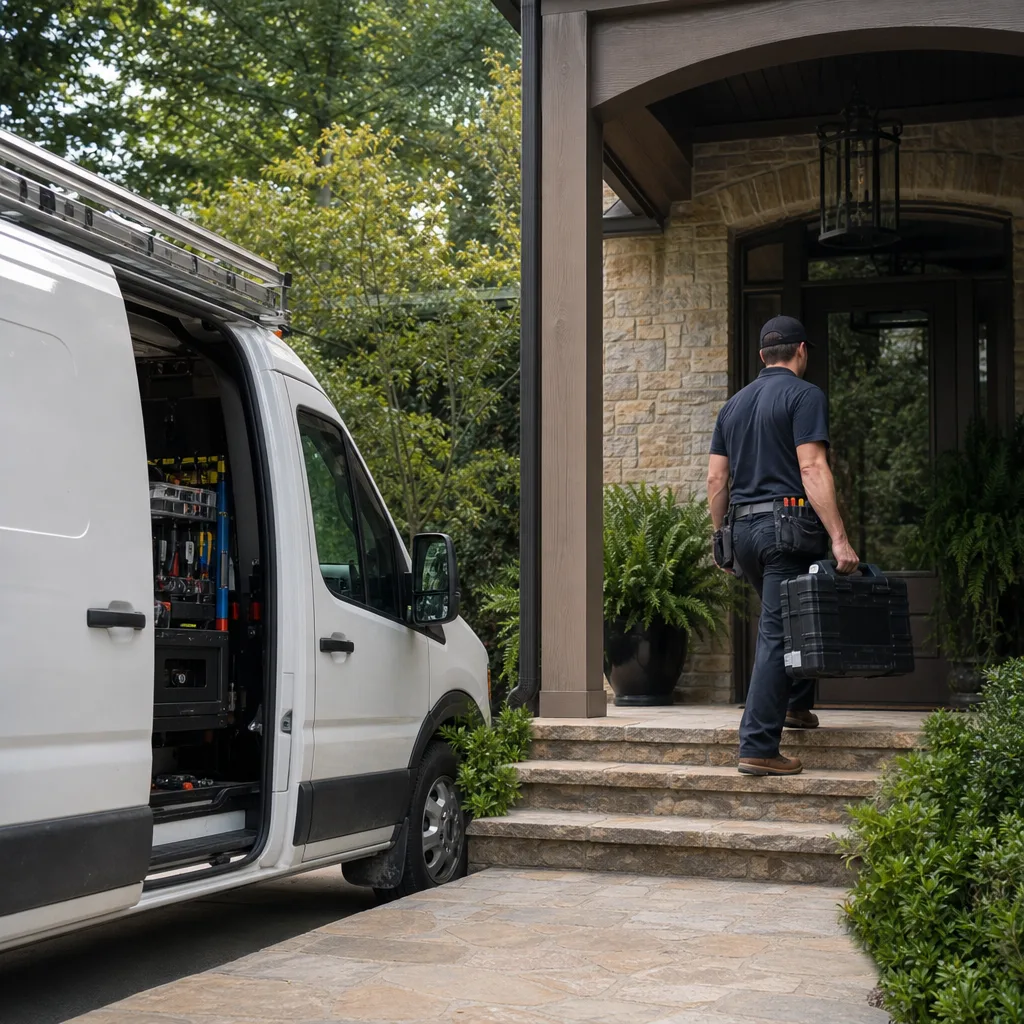
A master key system allows one key to open multiple locks, with sub-master and change keys opening subsets. It’s efficient. It’s also a cumulative security risk that most Marietta businesses manage poorly.
The typical failure pattern: an employee leaves in March. The business rekeys one cylinder, the one that employee carried. But that employee also had a sub-master that opened four doors. Did they copy it? Did they return it? Was the sub-master’s bitting recorded and verified against the original factory specification?
We’ve audited master key systems in Marietta medical practices where three years of turnover had accumulated eight unaccounted keys, two of which were sub-masters with access to controlled-substance storage. The practice manager thought each departure had been handled because individual cylinders were rekeyed. No one had audited the system’s logical integrity.
Annual master key audit protocol:
- Reconcile every issued key against the bitting list; any key not returned requires rekeying of every cylinder it operated
- Inspect each cylinder for unauthorized pinning changes, evidence of forced entry, or wear patterns indicating master-key override attempts
- Verify the top master key’s physical custody; it should be stored in a lockbox with access logged, not in the owner’s desk drawer
- Review the system’s hierarchy for “key escalation” risks, where a change key combination, by mathematical chance, also opens a higher-level cylinder
- Update the bitting list and key-control register; both documents should be stored off-site from the business location
For Schlage Primus and Mul-T-Lock MT5+ systems, we also verify the side-bar or interactive element pinning. These high-security features provide pick resistance, but only if the master key system’s bitting doesn’t create combinatorial weaknesses. We’ve found two Marietta installations where the master keying reduced the effective security to standard 6-pin levels. The owners had paid for high-security hardware and received standard security through poor system design.
Residential Locksmith in Marietta customers sometimes ask us to extend their home’s master key logic to a small commercial rental they own. We decline. Residential master keying, even with Grade 2 hardware, uses simpler combinatorial rules. Commercial systems require dedicated key-control software, factory-authorized programming for restricted keyways, and audit trails that residential practice simply doesn’t produce.
Access Control Battery and Credential Checks
Electronic access control, common in Marietta’s newer commercial developments, shifts maintenance from mechanical to electromechanical. The failure modes are different. The neglect patterns are worse because there’s no physical key to jiggle when something goes wrong, just a silent denial at 6:15 a.m.
Access Control Systems in Marietta require semiannual inspection minimum. Here’s what we check:
- Battery backup status. Most access control panels have a 12V or 24V battery backup for power-failure operation. Batteries degrade predictably in Georgia heat. We load-test and replace at 80% capacity, not at failure. A typical 7Ah battery in a non-climate-controlled Marietta electrical room lasts 18-24 months. We log install date and test results.
- Credential inventory. Every card, fob, or mobile credential issued should be active in the system. We export the credential list and compare to HR records. Deactivated credentials that still show “active” in the controller are a common finding. The employee left; the credential didn’t.
- Reader function and physical security. Wiegand readers are vulnerable to “reader spoofing” if the cable between reader and controller is accessible. We inspect conduit integrity and reader mounting torque. Loose readers indicate tampering attempts or weather-seal failure.
- Lock hardware synchronization. Electric strikes and magnetic locks must release within code-required timeframes. We time release events with a stopwatch. Delay beyond 2 seconds on a fire-rated egress door violates NFPA 80 and Georgia state fire code.
- Software and firmware revision. Outdated firmware in HID or Axis controllers creates known vulnerabilities. We verify revision against manufacturer security bulletins.
In the Merchants Walk and Avenue East Cobb developments, we’ve found access control panels installed by low-voltage contractors with no locksmith involvement. The credentials work. The audit trail doesn’t. The battery backup was never connected. The strike plate was installed with 3/4-inch screws into drywall. These aren’t access control systems; they’re access control theater.
Our maintenance visits include a documented photo record of the panel interior, battery test printout, and credential reconciliation report. Haven Standard Clause 7 requires this documentation on every electronic security service. The customer receives the original; we retain a copy for warranty support.
Documentation Standard: What a Maintenance Record Must Contain
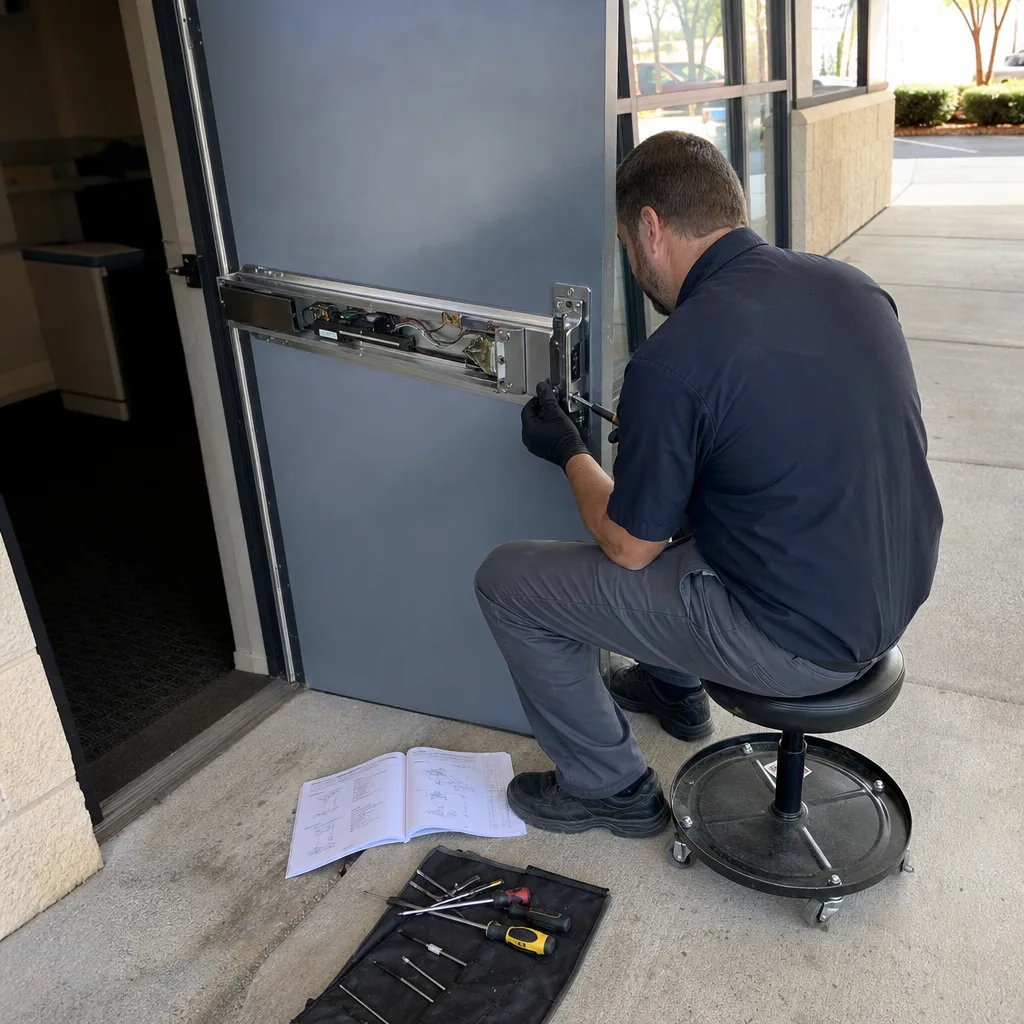
Commercial insurance policies in Georgia increasingly require proof of “reasonable security maintenance” for theft and liability coverage. A handwritten note saying “checked locks, all good” doesn’t satisfy this. We’ve seen claims denied for insufficient documentation.
Every commercial locksmith maintenance visit in Marietta should produce a record containing:
- Business name, address, and service date with technician identification number
- Specific hardware inventory by location: manufacturer, model, finish, and serial number where visible
- Observed condition for each item, using standardized terminology: “within specification,” “monitor,” “repair required,” “replace required”
- Cycle count or traffic estimate and next recommended inspection interval
- Services performed with product specifications, including lubricant brand and batch
- Photographs of keyway condition, strike plate engagement, frame alignment, and any defects found
- Customer signature acknowledging scope and results
- Written price for any recommended additional work, quoted before technician departure
At Novak Lock & Security, the documented photo record is standard, not optional, on every visit. The customer receives it at job completion, printed or emailed. The record includes timestamped images, the technician’s uniformed appearance for identification, and the Haven Standard clause reference for each promise made.
We’ve provided these records for Marietta businesses during insurance audits, OSHA inspections, and police investigations. In one case, a documented maintenance record showing proper electric strike function three weeks prior helped a restaurant owner disprove a negligence claim after an after-hours break-in. The strike had been maintained; the burglar entered through an unsecured window. The documentation mattered.
Commercial vs. Residential Hardware: The Maintenance Gap
The title of this guide says “homeowners” because that’s who searches. The reality is that Marietta’s small business operators, particularly those in converted residential spaces or mixed-use buildings, maintain commercial hardware with residential habits-a topic we explore in depth in DIY vs Professional Locksmith: The Marietta Homeowner’s Decision Guide. The consequences are expensive.
Key differences:
| Factor | Residential Grade 2 | Commercial Grade 1 |
|---|---|---|
| Cycle rating | 400,000 (ANSI/BHMA) | 1,000,000+ |
| Recommended inspection | Annual or biennial | Quarterly to biannual by traffic |
| Lubricant specification | Generic graphite acceptable | Manufacturer-specific required |
| Strike plate screws | 3/4 to 1 inch into jamb | 3 inch minimum into stud |
| Master keying complexity | Simple, 2-3 levels | Multi-level with key control |
| Documentation standard | Informal | Written, photographic, archived |
A Marietta retail tenant in a converted 1940s bungalow on Whitlock Avenue recently called us for a “sticky lock.” The hardware was a Grade 2 residential deadbolt, original to the building’s residential conversion in 1987, now serving a 150-cycle-per-day retail entrance. It had survived 1.6 million cycles, four times its rating, because no one had counted. The bolt was worn to a knife edge. The strike plate was held by two 1-inch screws, one stripped, into rotted jamb filler. The “sticky lock” was pre-failure warning of imminent security collapse.
We replaced with a Sargent 8200 Series Grade 1 mortise lockset, reinforced the frame with a steel strike box, and established a 6-month inspection interval based on actual traffic. The tenant’s previous locksmith had lubricated the failing deadbolt twice without noting the underlying mismatch between hardware grade and application.
Common Mistakes to Avoid
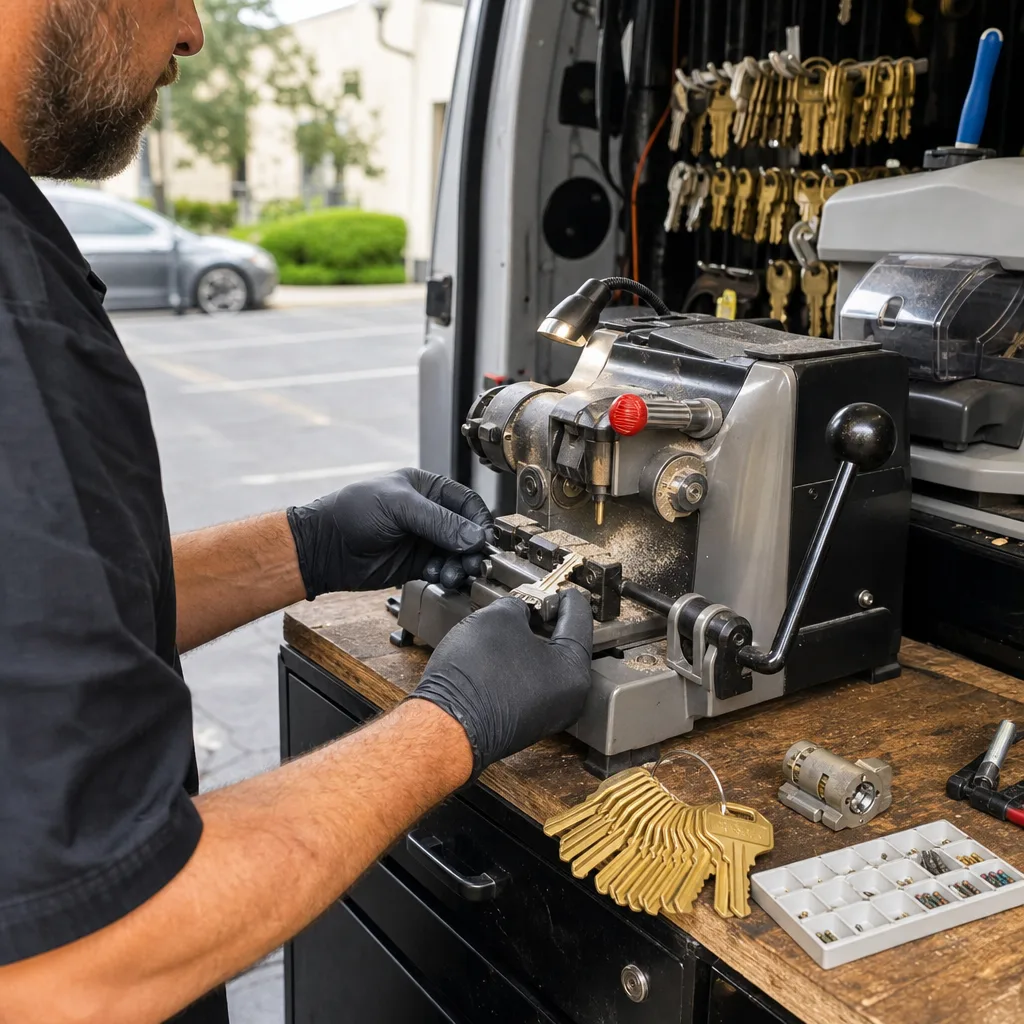
- Using WD-40 in any lock cylinder. It attracts dust, gums in humidity, and voids most manufacturer warranties. We’ve extracted hardened WD-40 residue from cylinders in Marietta’s waterfront-adjacent properties where salt air accelerates the problem.
- Rekeying one cylinder after employee departure without auditing the master key hierarchy. The departed employee’s key might open four other doors through a sub-master you forgot existed.
- Ignoring seasonal frame movement. That “lock works fine in winter” complaint from your Marietta Square storefront? It’s not the lock. It’s the frame. Adjust the strike plate in spring and fall, not the cylinder.
- Skipping battery tests because “the panel shows green.” Panel LEDs indicate charging circuit status, not battery capacity under load. We’ve replaced batteries that showed green but failed load testing by 60%.
- Using residential-grade hardware in commercial applications because “it’s cheaper.” The replacement cost at premature failure, plus downtime, plus potential liability, exceeds the initial savings by multiples. A Marietta dental office learned this when their Grade 2 storeroom lock failed during a DEA inspection.
- Failing to document. “We had it serviced” is not proof. Insurers and courts require contemporaneous written records with specific detail.
- Assuming all locksmiths maintain access control. Many Marietta “locksmiths” are key-cutters with no electronic credentials. Verify factory authorization for your specific access control brand before contracting.
When to Call a Professional
Call a commercial locksmith when: a cylinder requires repeated key jiggling to operate; any lock makes grinding, clicking, or squealing sounds; a key breaks or bends during normal operation; an electric strike releases intermittently; you’ve had employee turnover and haven’t audited key inventory in twelve months; or your insurance renewal requires proof of security maintenance.
Novak Lock & Security Marietta offers free estimates for commercial maintenance program setup in Marietta. We’ll inspect your hardware, count your cycles, and quote a written maintenance scope with specific intervals and documentation standards. No dispatch without a firm price. Call (762) 252-5919.
Frequently Asked Questions
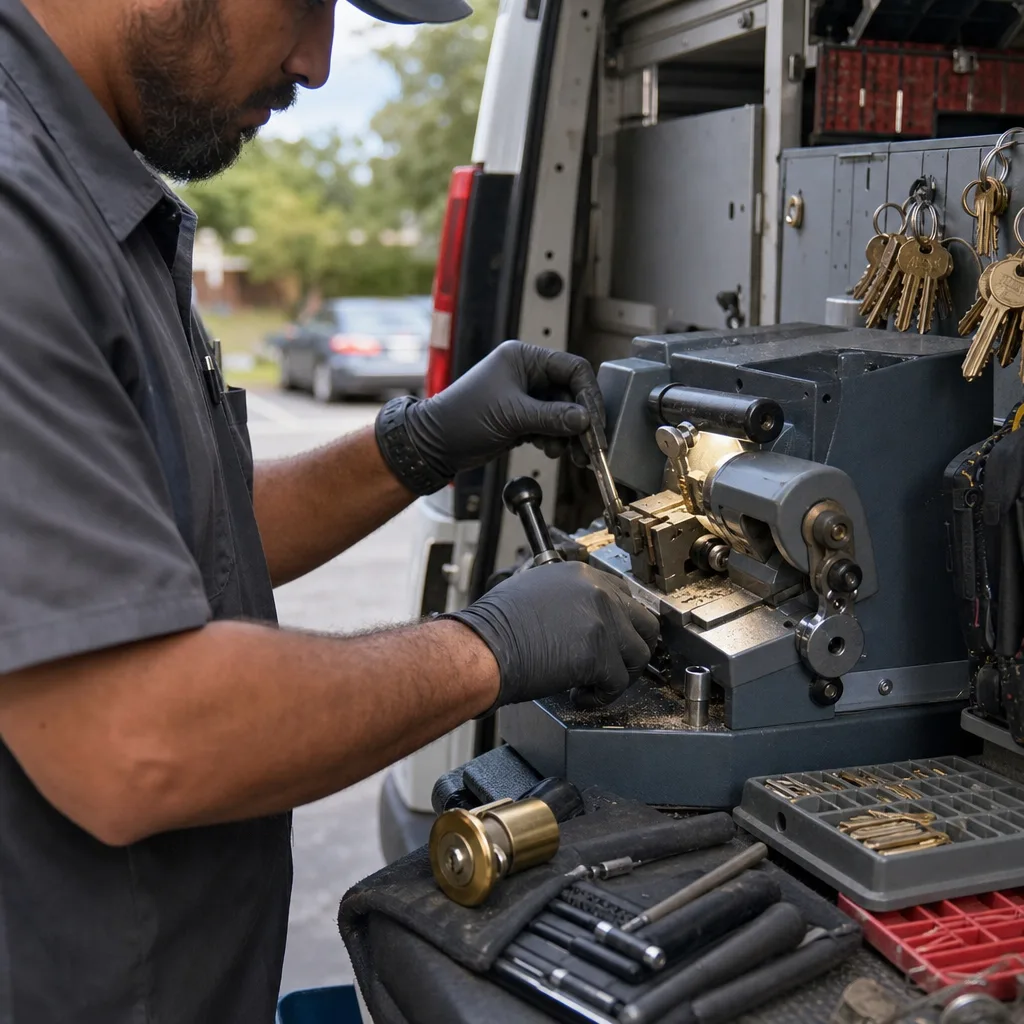
Commercial lock maintenance in Marietta typically runs $85-$195 per visit for a standard two-door retail location, with high-traffic or multi-point systems ranging $240-$480 for quarterly service. The price includes lubrication, alignment check, hardware condition report, and documented photo record. We quote in writing before dispatch, and Haven Standard Clause 1 prohibits any price change at the door. Call (762) 252-5919 for a written estimate specific to your location and traffic count.
Quarterly for high-traffic locations exceeding 150 cycles daily; biannual for moderate traffic of 50-150 cycles; annual minimum for any commercial hardware regardless of traffic. Marietta’s humidity and seasonal temperature swings accelerate wear beyond what arid climates experience. The red clay dust common to north Georgia construction and road work also increases particulate intrusion into keyways.
Yes. The price quoted by our dispatcher is the price on the invoice. This rule has been in place since 2002 and is Haven Standard Clause 1. The technician is contractually prohibited from changing it. If we discover additional needed work during service, we quote that separately and require your approval before proceeding. No surprises.
If you’ve rekeyed individual cylinders after employee departures but never had a systematic bitting-list audit, you likely have a gap. We find unrecorded sub-master keys in approximately 40% of first-time audits. The audit takes 1-2 hours for a typical 15-door system and produces a written key-control register with recommendations. It’s the most cost-effective security improvement most Marietta businesses can make.
Maintenance is scheduled, preventive, and documented. Repair is reactive, urgent, and often more expensive. A maintenance visit in Marietta typically costs $85-$195 and prevents failure. A cylinder replacement after seizure runs $180-$340 plus emergency service rates and potential business interruption. We structure maintenance programs to convert unpredictable repair costs into budgeted, scheduled expenses.
Both. We’re factory-authorized for service on major access control brands and carry the diagnostic equipment for credential testing, battery load analysis, and firmware verification. Our maintenance scope for electronic systems includes the same documented photo record and written report as mechanical hardware. Access Control Systems in Marietta require specialized expertise that general IT or low-voltage contractors often don’t provide.
The Bottom Line
Commercial lock maintenance in Marietta is not a calendar appointment. It’s a cycle-count discipline, adjusted for humidity, traffic, and hardware grade, as detailed in The Complete Guide to Locksmith in Marietta. The businesses that treat it seriously, document thoroughly, and match maintenance intervals to actual use patterns avoid the emergency calls that close storefronts and expose liability. The ones that don’t, call us eventually, usually before 8 a.m., usually with a line of customers waiting outside.
We’ve installed or serviced 60,000+ locks, keys, and systems since 2002. Every one started with a written price and ended with a documented record. For more guides & resources on protecting your business, visit our blog. If your Marietta business needs a maintenance program built on actual traffic counts, not generic schedules, we can quote that in writing today.
Written by Daniel Novak, Owner at Novak Lock & Security Marietta, serving Marietta since 2002.