
Last updated September 25, 2026
Non-destructive entry first, always - and we re-key Schlage, Kwikset, and Baldwin locks on the spot while you watch
You get a price before we start. It does not change when we arrive. No surprises.
Seasonal Locksmith Care for Marietta: Year-Round Homeowner’s Guide
Marietta averages fewer than five nights below 28°F per year - but those are the nights deadbolt cylinders seize, because summer humidity left moisture in the keyway that the first hard freeze turned to ice. Most homeowners in East Cobb and the historic district never think about their locks until they turn the key and feel nothing catch. This guide maps the four maintenance windows that matter in Cobb County’s specific climate, names the lubricants that help versus the ones that hurt, and shows you how to spot a lock that’s shifted from stiff to failing before you’re standing on your porch at midnight. For a deeper dive, see The Complete Guide to Locksmith in Marietta.
Quick Answer
Seasonal lock maintenance in Marietta requires four targeted actions per year: summer strike-plate alignment checks for swollen wooden frames, fall lubrication with dry graphite (never petroleum-based products), winter keyway moisture removal before freeze events, and spring debris clearing after pollen season. Done consistently, these steps prevent the two narrow failure windows - humidity-driven frame shift and freeze-seized cylinders - that cause most lockouts in Cobb County. Not sure whether to tackle this yourself? Read our DIY vs Professional Locksmith: The Marietta Homeowner’s Decision Guide.
Table of Contents
- Summer: Frame Swell and Strike Plate Shift
- Fall: The Right Lubricant for Marietta’s Climate
- Winter: Two-Minute Keyway Moisture Check
- Spring: Post-Pollen Deadbolt Inspection
- Year-Round: Reading the Wear Pattern
- What to Keep in Your Lock Maintenance Kit
- Common Mistakes to Avoid
- When to Call a Professional
- Frequently Asked Questions
Summer: Frame Swell and Strike Plate Shift
July in Marietta pushes relative humidity past 85% for weeks at a stretch. That moisture doesn’t just make you uncomfortable; it swells the wooden door frames common in homes built between 1985 and 2010 throughout East Cobb, Kennesaw Mountain corridor, and the older neighborhoods near Marietta Square. A frame that was plumb in April can shift enough by August that your deadbolt no longer throws cleanly into the strike plate.
The symptom most homeowners miss: the key turns, the thumb-latch moves, but you must push or pull the door to get the bolt to seat. You’re compensating for misalignment every time you lock up. Over time, this stresses the bolt mechanism and wears the cam inside the cylinder.
What to Check in July and August
- Close the door normally. Turn the deadbolt without touching the knob. If the bolt scrapes, grinds, or requires shoulder pressure against the door, the strike plate has fallen out of alignment.
- Inspect the strike plate screws. Most builders install strike plates with 3/4-inch screws that bite only into the door jamb. In Marietta’s clay-heavy soil, foundation settling is common; short screws pull out as the frame shifts. Replace with 2-1/2-inch screws that reach the framing stud behind the jamb.
- Check the gap. With the door closed, the gap between door edge and jamb should be consistent top to bottom. A gap that narrows toward the top indicates frame swell or hinge sag, both of which preload the deadbolt against the strike plate.
- Test at different times of day. Frame swell peaks in late afternoon when sun exposure and humidity coincide. A lock that works smoothly at 8 AM but binds at 5 PM is telling you the frame is moving.
We see this pattern repeatedly in the brick ranch homes off Roswell Road and in the Sandy Plains area. The fix is usually a strike plate adjustment, not a new lock - but if you force the deadbolt for a full summer, you’ll be replacing the internal mechanism by October. Residential locksmith service in Marietta for strike plate realignment typically runs $85-$140, quoted in writing before we start.
Fall: The Right Lubricant for Marietta’s Climate
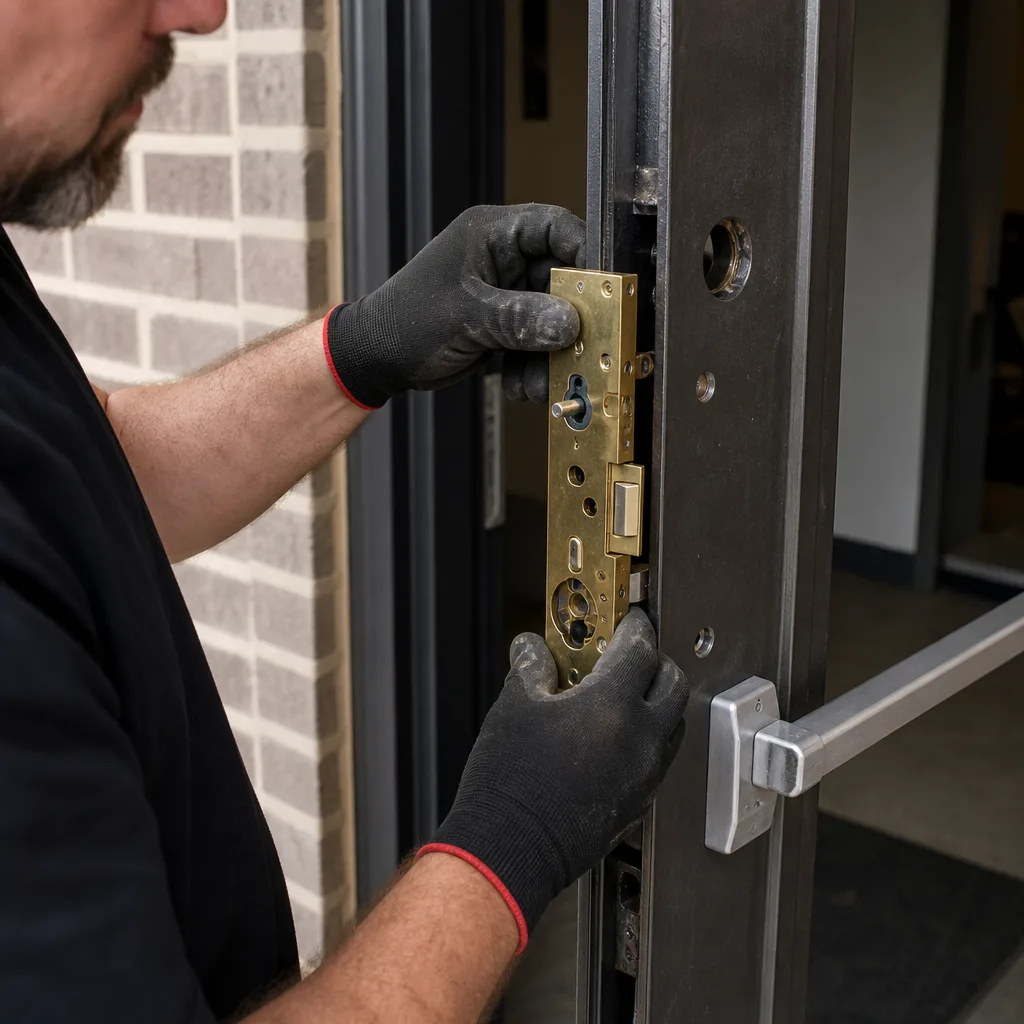
The graphite versus WD-40 debate ends quickly when you understand how petroleum-based lubricants behave in Cobb County’s humidity. WD-40 and similar products are solvents with light oil suspended. They flush debris from the keyway, but the oil residue never fully evaporates. In Marietta’s fall humidity, that residue attracts airborne grit - pollen dust, road particulate, the fine red clay that blows off construction sites in west Cobb. Within six weeks, the keyway is stickier than before you sprayed.
Worse: petroleum products degrade the nylon and Delrin components inside many modern lock cylinders. Schlage and Kwikset residential deadbolts use polymer followers and spring guides that soften with prolonged oil exposure. We’ve opened cylinders in Smyrna and Mableton where the follower had deformed into an oval, causing the key to catch at 45 degrees.
What to Use Instead
Dry graphite powder is the correct lubricant for pin-tumbler cylinders in humid climates. It coats the pins without residue, does not attract debris, and maintains performance from 90% humidity down to hard freeze. Apply sparingly: a puff into the keyway, work the key in and out five times, wipe excess from the blade.
For exterior padlocks on gates and sheds - common in the large-lot homes off Paper Mill Road and Shallowford Road - use a Teflon-based dry lube. Graphite can cake in exposed mechanisms, while Teflon dries to a film that sheds water without attracting grit.
| Lubricant Type | Best Application | Marietta Climate Consideration |
|---|---|---|
| Dry graphite powder | Door lock cylinders (Schlage, Kwikset, Medeco) | No residue; won’t attract summer humidity debris |
| Teflon dry spray | Exposed padlocks, gate hardware | Forms water-shedding film; resists clay dust |
| White lithium grease | Boltwork, hinges, strike plates | Use only on non-cylinder moving parts; keep out of keyway |
| Petroleum-based sprays (WD-40, etc.) | Not recommended for cylinders | Residue attracts grit; degrades polymer internals |
Apply lubricant in late October, after pollen season has fully cleared but before the first freeze. In Marietta, that window typically runs October 15 to November 15. Mark your calendar; the first hard freeze in Cobb County often arrives in mid-November with little warning.
Winter: Two-Minute Keyway Moisture Check
Marietta’s cold snaps are brief but sharp. The National Weather Service records show Cobb County averages 3.7 nights per year below 25°F, concentrated in January. Those nights are when we field emergency calls from homeowners whose keys slide into the cylinder but won’t turn - moisture that accumulated during August and September has frozen across the pin stack.
The failure is invisible until it happens. Humidity enters the keyway through normal use: your key carries microscopic moisture from your hand, from rain, from the humid air itself. Over months, this accumulates on the pins and springs. The first hard freeze locks the pins in place. You insert the key, but the pins cannot depress to the shear line.
The Two-Minute Check (Do This Before the First Freeze)
- Remove the key. Hold a flashlight at an angle to the keyway opening. Look for sheen or droplet reflection on the top pins - moisture shows as a faint gloss on the brass or nickel surfaces.
- Insert and remove the key rapidly ten times. Feel for drag that varies with insertion depth. Consistent drag suggests dry pins; drag that lightens as the key seats suggests moisture pooling in the rear of the cylinder.
- Blot the keyway. Fold a corner of paper towel, insert carefully, and hold for ten seconds. Any visible dampness on the towel confirms moisture accumulation.
If you find moisture: dry the keyway with compressed air (short bursts, low pressure), then apply dry graphite. Do not use a hair dryer; the heat drives moisture deeper into the mechanism and can warp polymer components.
For homes in flood-prone pockets of Marietta - the areas near Nickajack Creek and Rottenwood Creek - this check is more critical. Groundwater humidity penetrates exterior walls more aggressively, and we’ve found moisture in cylinders that showed no external corrosion. Novak Lock & Security Marietta home page lists our winter prep service if you’d prefer a technician perform this inspection.
Spring: Post-Pollen Deadbolt Inspection
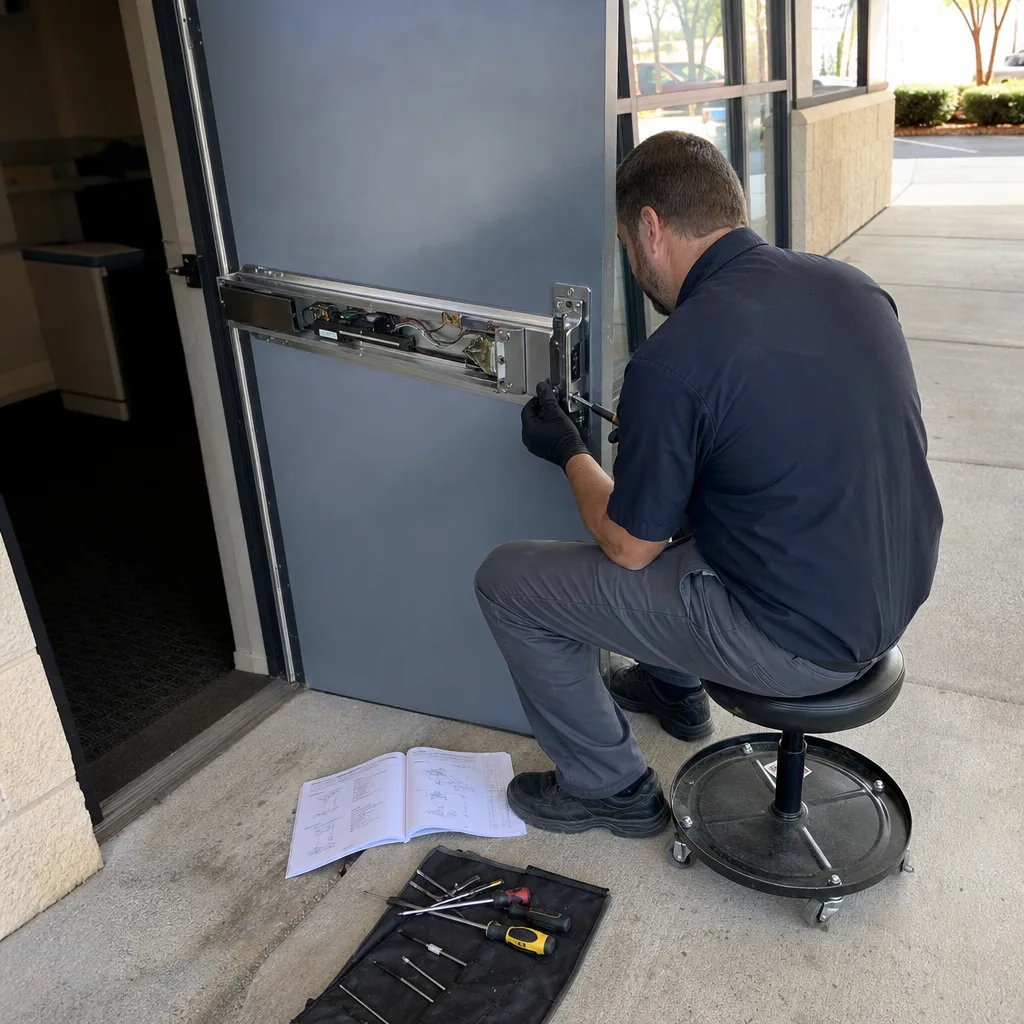
Georgia’s pollen season peaks in late March and early April. In Marietta, the oak and pine canopy that makes the city green from April through October deposits a fine yellow film on every exterior surface. What homeowners don’t see: that same film works into keyways, accumulates under escutcheon plates, and packs into the gap between cylinder housing and door face.
The specific pattern we find in spring service calls: the key inserts smoothly and turns, but the thumb-latch feels gritty or the bolt retracts slowly. Pollen has mixed with the previous fall’s lubricant to form a paste that interferes with boltwork, not the pin stack. The lock isn’t failing; it’s gummed up.
Spring Cleaning Steps
- Remove the cylinder. On most residential deadbolts, two screws on the interior faceplate release the thumb-latch assembly. Pull the interior and exterior halves apart carefully; note any shims or spacers for reassembly.
- Clean the boltwork. Wipe the bolt, bolt housing, and strike face with a dry cloth. If paste has accumulated, use a cotton swab dampened with isopropyl alcohol - not water, which introduces new moisture.
- Blow out the keyway. Compressed air from the keyway opening, directed outward, clears pollen from between pins. Do not insert objects; the pins are spring-loaded and can be displaced.
- Inspect the exterior trim. Pollen traps moisture against the door face. Check for finish degradation or corrosion at the cylinder collar - early signs that water is being held against the metal.
- Relubricate sparingly. After cleaning, apply dry graphite to the cylinder and white lithium grease to boltwork only. Reassemble and test with the door both open and closed.
In neighborhoods with mature canopy - the historic district around Whitlock Avenue, the tree-lined streets of Indian Hills - we recommend this inspection annually. The density of oak pollen in these areas is measurably higher than in newer subdivisions with younger plantings.
Year-Round: Reading the Wear Pattern
A lock moves through predictable stages before failure. Most Marietta homeowners don’t recognize the transition points, so they call only when the key won’t turn at all. Here’s what we look for during service calls, and what you can check yourself. For a printable reference, download our Commercial Locksmith Maintenance Checklist for Marietta Homeowners.
Stage 1: Key Resistance Varies by Temperature
The lock works smoothly at 75°F but requires more pressure at 45°F. This indicates moisture in the cylinder that’s beginning to affect pin movement, or polymer components that are aging and becoming temperature-sensitive. Action: perform the keyway moisture check, re-lubricate with dry graphite.
Stage 2: Key Must Be Jiggled to Seat
You’ve developed an unconscious habit of wiggling the key to find the right angle. This means the plug (the rotating portion of the cylinder) has developed play in the housing, or the pins are wearing unevenly. The lock still functions, but the tolerances are opening. Action: schedule rekeying or cylinder replacement before the play becomes binding. Rekeying in Marietta typically runs $19-$35 per cylinder, with a firm written quote before dispatch.
Stage 3: Bolt Retracts but Doesn’t Extend Fully
The lock unlocks but won’t lock without door pressure. This is strike plate misalignment, often from cumulative frame shift, or boltwork wear from forcing misaligned throws. Action: check frame alignment, replace strike plate screws with longer hardware, or call for strike plate adjustment.
Stage 4: Key Turns but Bolt Doesn’t Move
The cam connecting plug to boltwork has failed, or the tailpiece has sheared. This is a non-functional lock that may still appear secure. Action: immediate replacement. The lock provides no security even if the key operates.
We document these stages with photo records on every visit - Haven Standard procedure, included as standard. If you’re unsure which stage your lock has reached, Commercial and residential locksmith services in Marietta include free condition assessment with any service call.
What to Keep in Your Lock Maintenance Kit
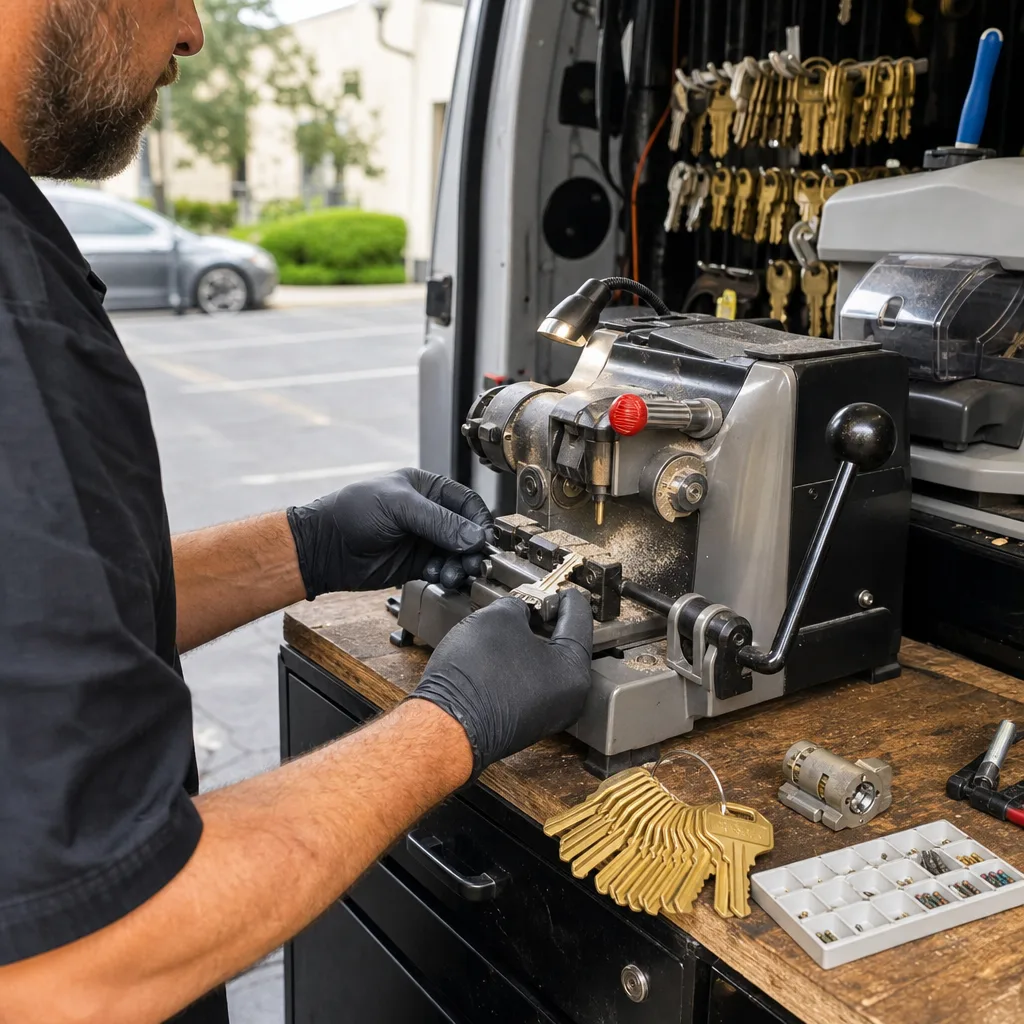
You don’t need a technician’s full kit for seasonal maintenance. These six items handle 90% of what Marietta’s climate throws at residential locks:
- Dry graphite powder - HPC or comparable locksmith-grade, not hardware store spray graphite which contains solvents
- Teflon dry lube spray - for exterior padlocks and gate hardware
- 2-1/2-inch #8 wood screws - for strike plate upgrades; buy brass or coated to match existing finish
- Isopropyl alcohol, 91% - for cleaning pollen paste and old lubricant residue
- Compressed air duster - for keyway debris removal; keep upright to avoid propellant discharge
- Flashlight with narrow beam - for inspecting pin condition through the keyway
Total investment: under $40. Compare to emergency lockout service at any hour, or the cost of drilling and replacing a seized high-security cylinder. Medeco and Mul-T-Lock cylinders run $180-$340 installed; basic Schlage or Kwikset replacement runs $140-$220. Maintenance is cheaper.
Common Mistakes to Avoid
- Spraying WD-40 into the keyway. The solvent flushes debris but leaves oil residue that attracts grit and degrades polymer components. We’ve replaced cylinders in Marietta homes where this was done annually for five years; the internal wear was advanced beyond the lock’s age.
- Ignoring seasonal frame shift. Homeowners who adjust the strike plate once and never again find their deadbolts failing prematurely. In Cobb County’s clay soil, frame movement is continuous; check alignment each summer.
- Using graphite on exposed padlocks. Graphite cakes and hardens when exposed to rain and temperature cycling. Gate locks on Marietta’s larger properties need Teflon-based dry lube, not graphite.
- Forcing a key that won’t turn. Excessive torque shears the cam or twists the tailpiece. If the key won’t turn, stop. Check for moisture, check alignment, then call if the issue persists. Forcing it turns a $120 service call into a $280 lock replacement.
- Skipping spring cleaning after pollen season. The yellow film is more than cosmetic in Marietta’s dense canopy areas. Pollen paste accelerates wear on boltwork and can jam thumb-latch mechanisms by June.
- Assuming all locks need the same maintenance. High-security cylinders (Medeco, Mul-T-Lock, Abloy) have tighter tolerances and different materials. They require less frequent but more precise lubrication; excess graphite can actually impede sidebar operation in some designs.
When to Call a Professional
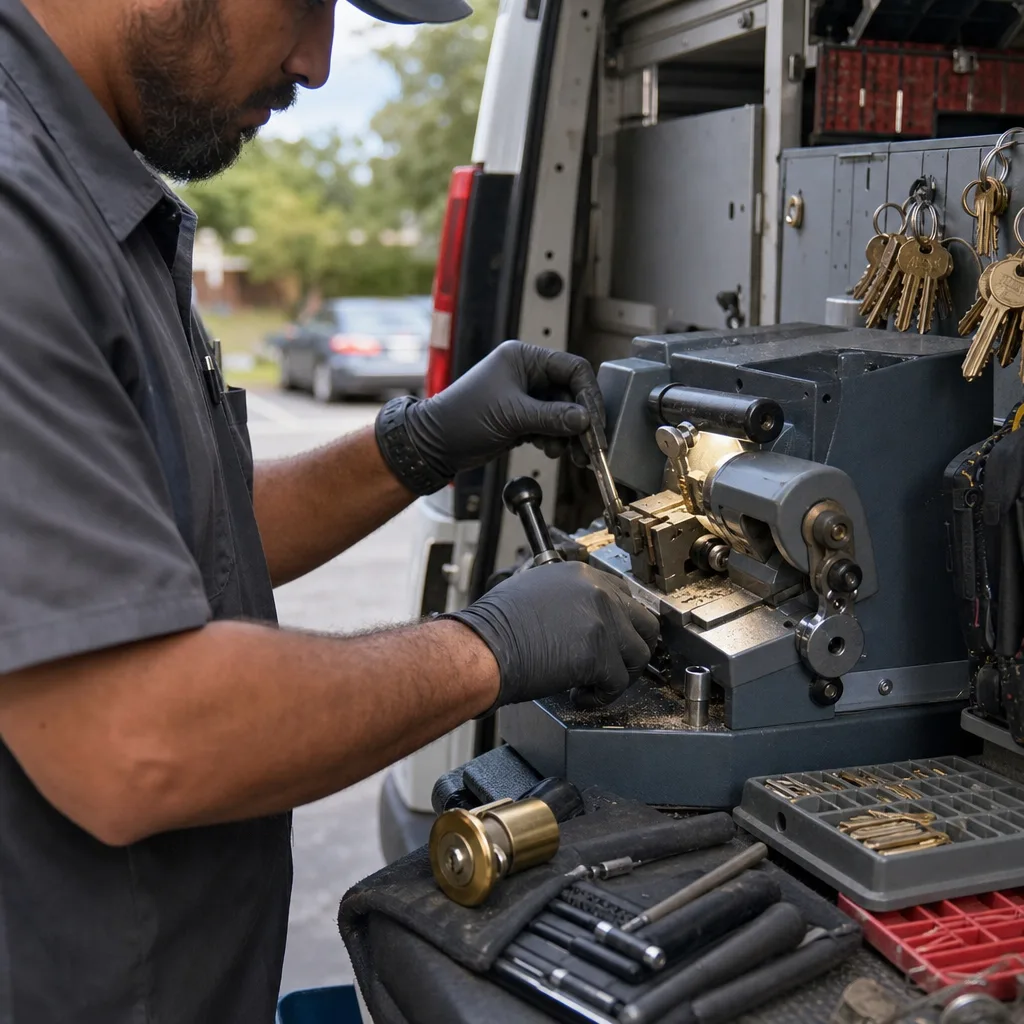
Some conditions require tools or expertise beyond homeowner maintenance. Call a locksmith if you encounter: a key that turns 360 degrees without retracting the bolt (cam failure); visible corrosion or pitting on the cylinder exterior; a lock that has been forced or drilled by a previous owner; any high-security cylinder showing wear symptoms; or a smart lock with mechanical override that isn’t responding.
Novak Lock & Security Marietta offers free estimates for condition assessment and maintenance scheduling. Calls are answered by a live person 24/7 - no automated queue. Our dispatcher quotes a firm price on the phone; the technician is contractually prohibited from changing it at the door. Haven Standard Clause 1: the price on the phone is the price on the invoice. For a free estimate in Marietta, call (762) 252-5919.
Frequently Asked Questions
Professional seasonal maintenance - including cylinder inspection, lubrication, strike plate adjustment, and wear assessment - typically runs $120-$180 for a standard home with two exterior doors. High-security cylinders or smart locks with mechanical components add $40-$80 per device. We quote a firm written price before dispatch; the technician cannot change it at the door. Call (762) 252-5919 for an exact quote - estimates are free.
Yes. Haven Standard Clause 1 prohibits any price change between phone quote and invoice. The dispatcher gathers scope details, names the price range, and confirms the exact figure before scheduling. What we say on the phone is what appears on the invoice. This rule has been in place since 2002.
Emergency lockout response in Marietta and immediate Cobb County typically ranges 20-45 minutes depending on time of day and technician location. Calls are answered live 24/7; no callback window, no voicemail queue. The dispatcher confirms ETA and price before the technician is dispatched.
Georgia requires locksmith company licensing through the Georgia Board of Private Detective and Security Agencies. Our technicians carry license verification, wear uniforms, and provide a documented photo record at job completion. Background checks are completed before hire and renewed annually. We’re happy to provide license details on request - no decorative badges, verifiable evidence.
Silicone spray is better than petroleum products but inferior to dry graphite for pin-tumbler cylinders. Silicone leaves a film that can accumulate dust and slow pin movement over time. In Marietta’s humidity, we’ve found graphite provides 18-24 months of smooth operation versus 8-12 months for silicone. For exposed padlocks, silicone is acceptable; for door cylinders, use dry graphite.
Smart locks with mechanical key override require the same cylinder maintenance as conventional deadbolts. The electronic components don’t need lubrication, but the mechanical backup cylinder is vulnerable to the same humidity and pollen issues. Yale and Schlage smart locks we service in Marietta typically show cylinder wear at the same intervals as their conventional counterparts; the electronics often mask the mechanical degradation until override is needed. Include the keyway in your seasonal check even if you normally use the keypad.
The Bottom Line
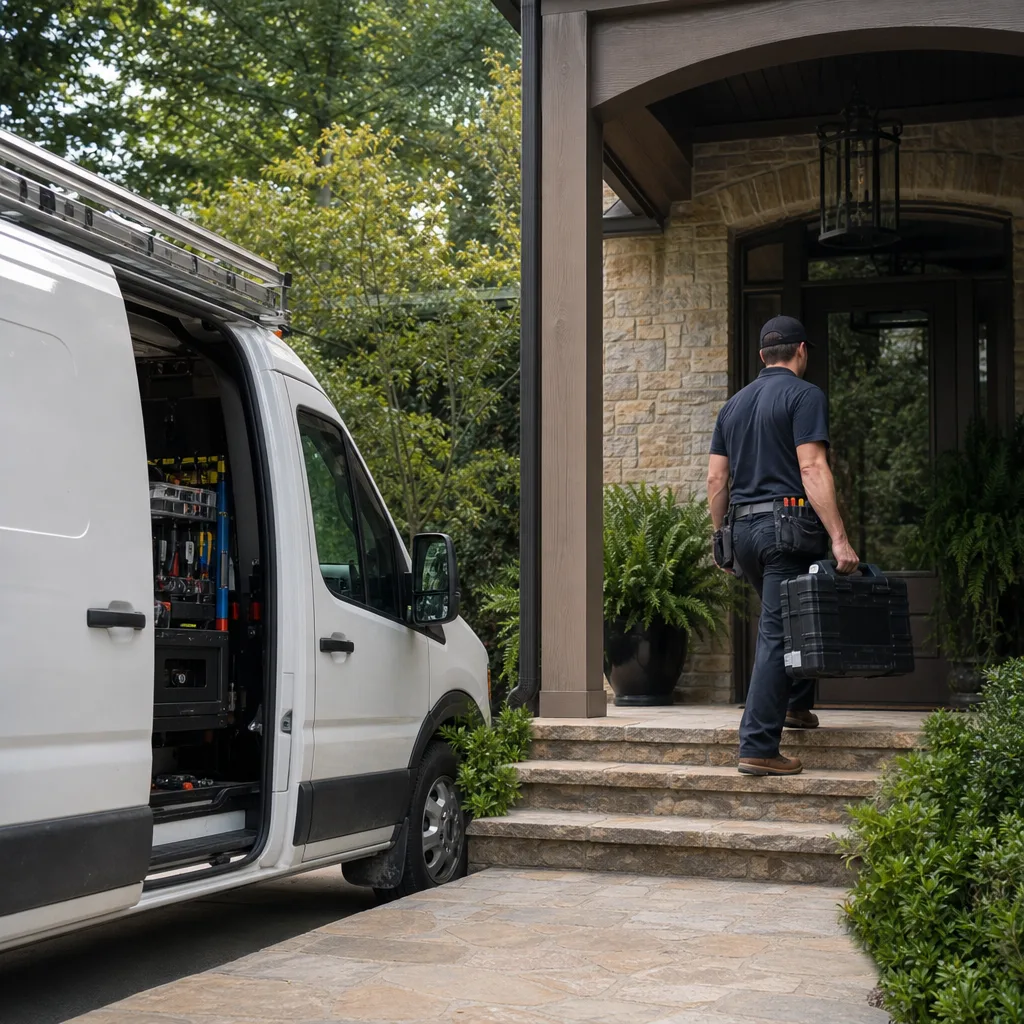
Marietta’s climate creates two specific lock failure windows: humidity-driven frame shift in summer, and freeze-seized cylinders after moisture accumulates through fall. The maintenance is simple - strike plate checks, dry graphite lubrication, keyway moisture removal, and post-pollen cleaning - but it must happen on schedule. A lock that receives seasonal attention lasts 15-20 years; one that doesn’t fails in 5-7, often at the most inconvenient moment. The cost of prevention is a fraction of emergency service or premature replacement. Mark your calendar for the four windows, keep graphite and long screws on hand, and know the wear stages before they become lockouts. Explore more guides & resources on keeping your home secure year-round.
For a free condition assessment or written estimate on any lock maintenance or replacement in Marietta, call Novak Lock & Security Marietta at (762) 252-5919. Calls answered live, 24/7. Price quoted on the phone is the price on the invoice - Haven Standard Clause 1, in force since 2002.
Written by Daniel Novak, Owner at Novak Lock & Security Marietta, serving Marietta since 2002.