
Last updated September 25, 2026
Non-destructive entry first, always - and we re-key Schlage, Kwikset, and Baldwin locks on the spot while you watch
You get a price before we start. It does not change when we arrive. No surprises.
Locksmith Permits, Codes & Inspections in GA: What You Need to Know
Georgia is one of fewer than 15 states with no mandatory locksmith licensing - but that doesn’t mean anything goes. In Marietta, Cobb County building codes specify exactly which lock hardware is legal on egress doors in residential and commercial occupancies, and the penalties for non-compliant installs fall on the property owner, not the technician. Most homeowners we meet in East Cobb and the Historic Marietta Square district assume a “licensed locksmith” credential protects them; it doesn’t exist here. The real regulatory layer lives in the International Building Code as adopted by Cobb County, the National Fire Protection Association standards for fire-rated assemblies, and the Americans with Disabilities Act requirements for commercial lever hardware. This guide explains where the rules actually live, what triggers a permit, and how to verify a completed installation without calling the county inspector every time.
Quick Answer
Georgia has no statewide locksmith license, so anyone can call themselves a locksmith. In Marietta and unincorporated Cobb County, lock installations are regulated by the International Building Code (IBC) and International Residential Code (IRC) as locally amended. A permit is required when lock hardware is installed on a new egress door, when fire-rated door assemblies are modified, or when commercial occupancy changes trigger accessibility compliance reviews. Most simple lock replacements on existing residential doors do not require a permit, but the hardware must still meet ANSI/BHMA Grade 2 minimum for exterior doors and Grade 3 for interior passage doors.
Table of Contents
- Georgia Has No Statewide Locksmith License - Here’s What That Actually Means
- What Cobb County Building Codes Say About Egress Door Hardware
- When a Lock Installation in Marietta Requires a Building Permit
- ADA Compliance for Commercial Lever Hardware in Marietta
- Fire-Rated Door Hardware: Why the Wrong Lock Voids the Rating
- How to Verify a Lock Installation Meets Code Without Calling the Inspector
- Common Mistakes to Avoid
- When to Call a Professional
- Frequently Asked Questions
- The Bottom Line
Georgia Has No Statewide Locksmith License - Here’s What That Actually Means
Georgia does not require locksmiths to hold a state occupational license, pass a background check, or complete any minimum training. The Georgia Secretary of State’s office does not maintain a locksmith registry. This puts Georgia in a minority of states - Alabama, California, Connecticut, Illinois, Louisiana, Maryland, Nebraska, Nevada, New Jersey, North Carolina, Oklahoma, Oregon, Tennessee, Texas, and Virginia all have some form of statewide locksmith regulation, ranging from voluntary registration to full licensing with examination requirements.
What exists instead is a patchwork of local business licenses and, more importantly, building codes that govern the hardware itself. In Marietta, a locksmith operating within city limits needs a Novak Lock & Security Marietta home business license from the City of Marietta Revenue Division. In unincorporated Cobb County, the Cobb County Business License Division issues the license. These are general business licenses, not trade credentials. They do not certify skill, test knowledge of codes, or require continuing education.
The practical effect for homeowners in neighborhoods like Indian Hills, West Cobb, or the Whitlock Avenue corridor is this: the technician at your door may have twenty years of experience or twenty days. The only verifiable credentials are the ones you can inspect yourself - insurance certificates, written warranties, and documented work history. At Novak Lock & Security, we provide a written price before any work starts, a documented photo record at completion, and the 365-Day Done Right Promise on every installation. Haven Standard Clause 1 applies: the price quoted on the phone is the price on the invoice, with no exceptions since 2002.
We’ve seen the consequences of the regulatory gap. In 2019, a homeowner in the Kennesaw Avenue historic district hired an unlicensed operator who installed a double-cylinder deadbolt (key required on both sides) on the front door of a rental property. When a tenant could not escape during a kitchen fire, the property owner faced liability exposure that no business license would have prevented. The hardware choice, not the technician’s credentials, became the legal issue.
What Cobb County Building Codes Say About Egress Door Hardware
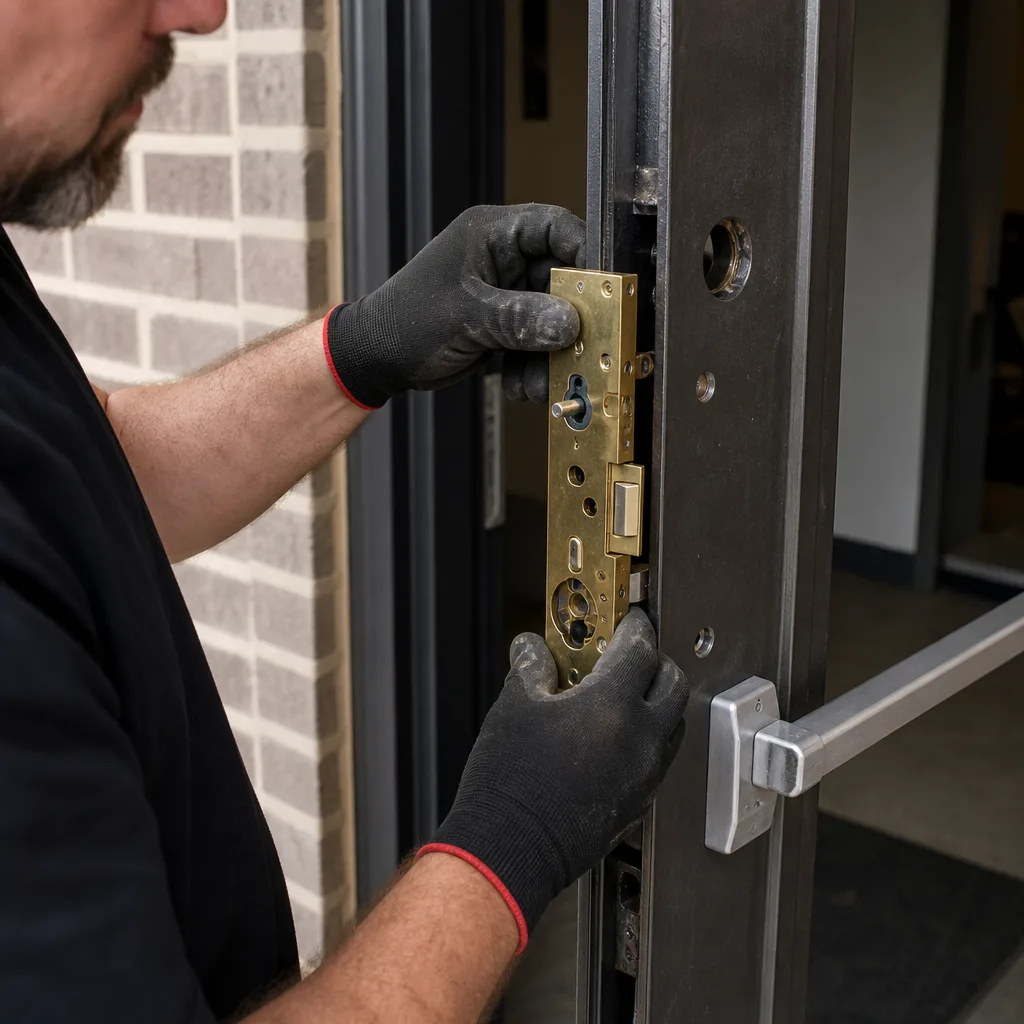
Cobb County adopts the International Building Code (IBC) and International Residential Code (IRC) with local amendments. The current adopted version, as of the 2023 code cycle update, governs all new construction, additions, and alterations in Marietta and unincorporated Cobb County. For existing buildings, the code in force at the time of original construction generally applies unless a trigger event - renovation, occupancy change, or damage repair exceeding 50% of building value - forces compliance with current standards.
The critical section for lock hardware is IBC Section 1010 (Doors, Gates and Turnstiles) and IRC Section R311 (Means of Egress). These sections specify that egress doors must be openable from the inside without a key, tool, or special knowledge. The specific requirements break down by occupancy type:
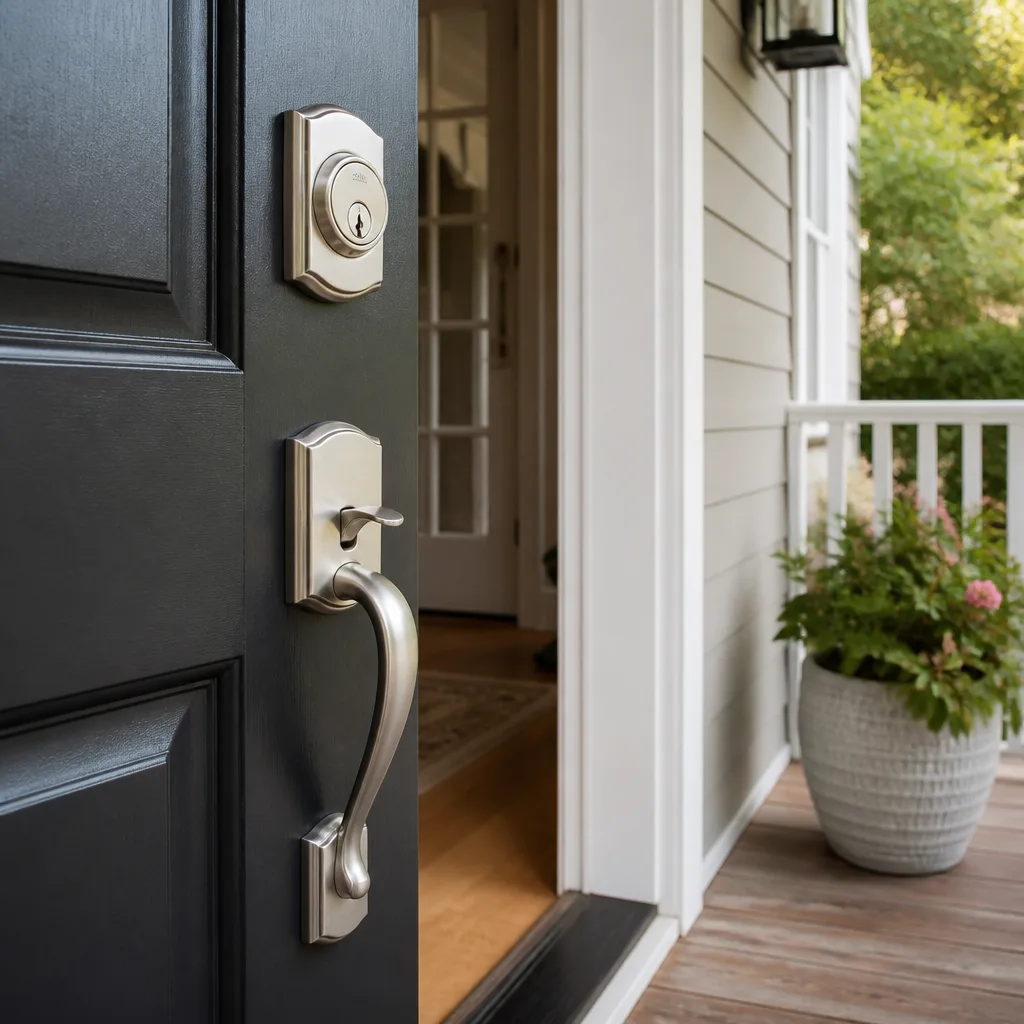
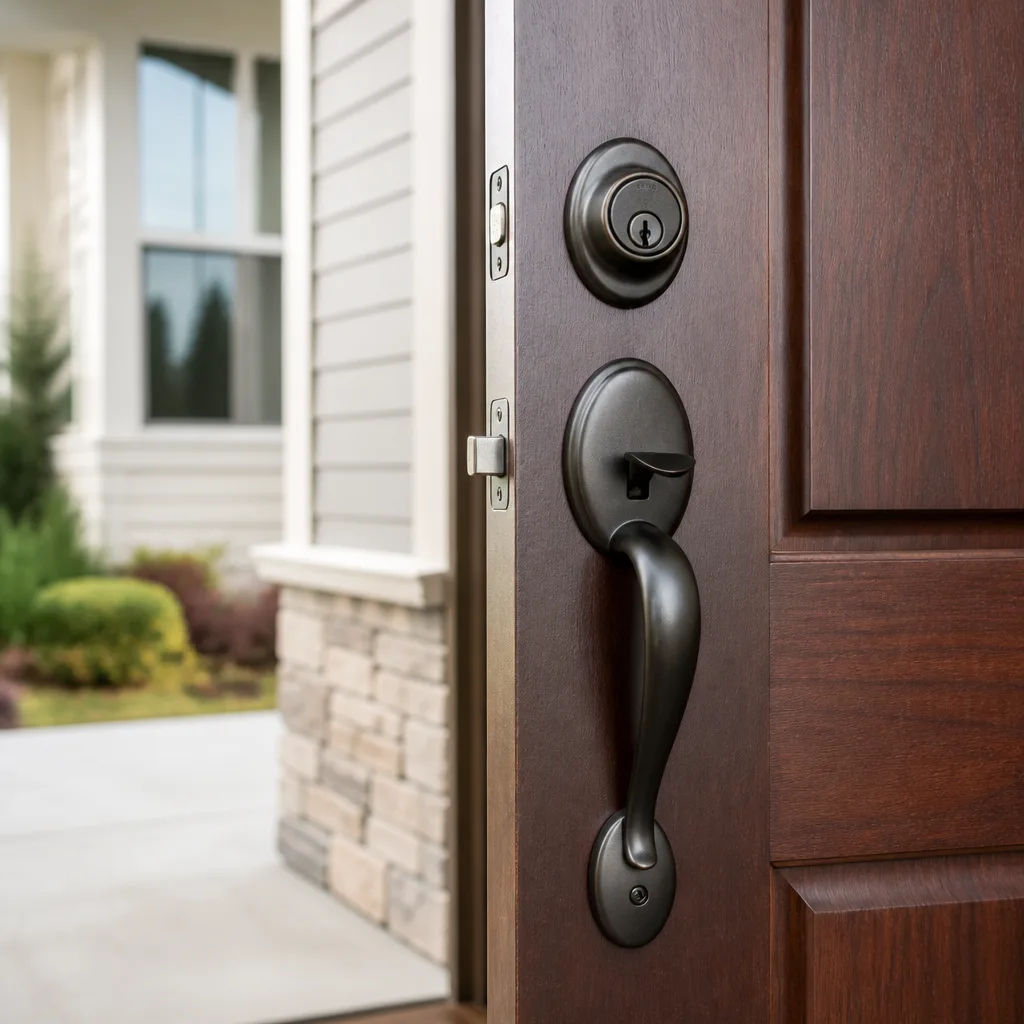
- Group R-3 (one- and two-family dwellings): Single-family homes and duplexes in Marietta must have at least one operable exterior door per dwelling unit with a clear width of 32 inches minimum. The lock must allow free egress without a key from the inside. This prohibits double-cylinder deadbolts on required egress doors unless a specific exception applies (such as a door within 10 feet of a pool, with additional safety devices).
- Group R-2 (multifamily dwellings): Apartments and condominiums, common in the Powers Ferry Road and Windy Hill Road corridors, face stricter requirements. All sleeping unit doors must allow free egress. Panic hardware (push-bar exit devices) is required on exit doors in corridors serving more than 50 occupants.
- Group B (business occupancies): Office buildings in the Marietta Triangle and along Roswell Road must have hardware that allows free egress. Levers are required by ADA; knobs do not comply for public or employee areas.
- Group E (educational) and Group A (assembly): Schools, theaters, and assembly spaces require panic hardware on all egress doors and fire exit hardware on rated doors.
The ANSI/BHMA grading system is the technical standard referenced by code. Grade 1 hardware is tested to 1 million cycles; Grade 2 to 800,000 cycles; Grade 3 to 400,000 cycles. For exterior doors in Marietta’s climate - hot, humid summers with occasional freeze-thaw cycles - Grade 2 is the practical minimum for residential applications. Grade 3 hardware, common in big-box retail lock sets, often fails within 3-5 years in Georgia conditions. We specify Grade 2 or Grade 1 on all exterior installations, with brands like Schlage (Grade 2 residential lines), Baldwin (Grade 1 decorative hardware), and Medeco (Grade 1 high-security cylinders) depending on the security requirement and budget.
Cobb County’s local amendment to the IRC adds one notable requirement: all new residential construction must have hardware installed on all exterior doors prior to final inspection. This means a builder cannot obtain a certificate of occupancy with missing or temporary hardware. We’ve been called to new construction in subdivisions like Walton Ridge and Chimney Springs where the original contractor’s hardware failed inspection due to incorrect grade or missing deadbolts.
When a Lock Installation in Marietta Requires a Building Permit
Most homeowners assume permits are only for construction. Lock hardware triggers permitting in specific circumstances that are easy to miss. Understanding the threshold saves time, prevents redo work, and protects property value at sale.
Permit Required
- New door installation in new construction or additions: Any door cut into a new or modified wall requires a building permit. The lock hardware is inspected as part of the door assembly.
- Fire-rated door hardware replacement: Changing a lock, closer, or exit device on a fire-rated door (typically 20-minute to 90-minute rating, marked with a label on the door edge) requires the replacement hardware to be listed for that rating. Cobb County requires a permit for any modification to a fire-rated assembly.
- Occupancy change in commercial buildings: Converting a retail space to office, or office to restaurant, triggers a full code review including egress hardware. The Marietta Building Inspections Department issues these permits.
- Accessibility upgrades: Commercial buildings undergoing renovation that touches the “primary function area” must upgrade to current ADA standards, including lever hardware on all public and employee doors.
- Historic district work: The Marietta Historic Preservation Commission reviews exterior door changes in the locally designated historic districts, including hardware visible from the public right-of-way.
No Permit Required
- Direct replacement of lock hardware on existing residential doors, same function and grade or higher
- Rekeying of existing cylinders
- Installation of additional locks on interior doors (non-egress)
- Smart lock installation on existing prepped doors, provided the hardware meets Grade 2 minimum and maintains free egress
The threshold most homeowners don’t know exists: fire-rated doors in multifamily buildings. In condominium complexes like those along Terrell Mill Road, the entry door to each unit is often a 20-minute fire-rated door. Replacing the lock with non-listed hardware voids the rating, violates the IBC, and can create liability if fire spreads between units. The permit is inexpensive - typically $50-150 in Marietta - but the inspection ensures the hardware is properly labeled and installed.
We’ve documented cases in Marietta where a homeowner installed a consumer-grade smart lock on a fire-rated condo door, only to have the issue flagged at resale inspection. The closing was delayed while the hardware was replaced with a listed model. The original “savings” on hardware cost several hundred dollars in inspection delays and emergency replacement.
ADA Compliance for Commercial Lever Hardware in Marietta
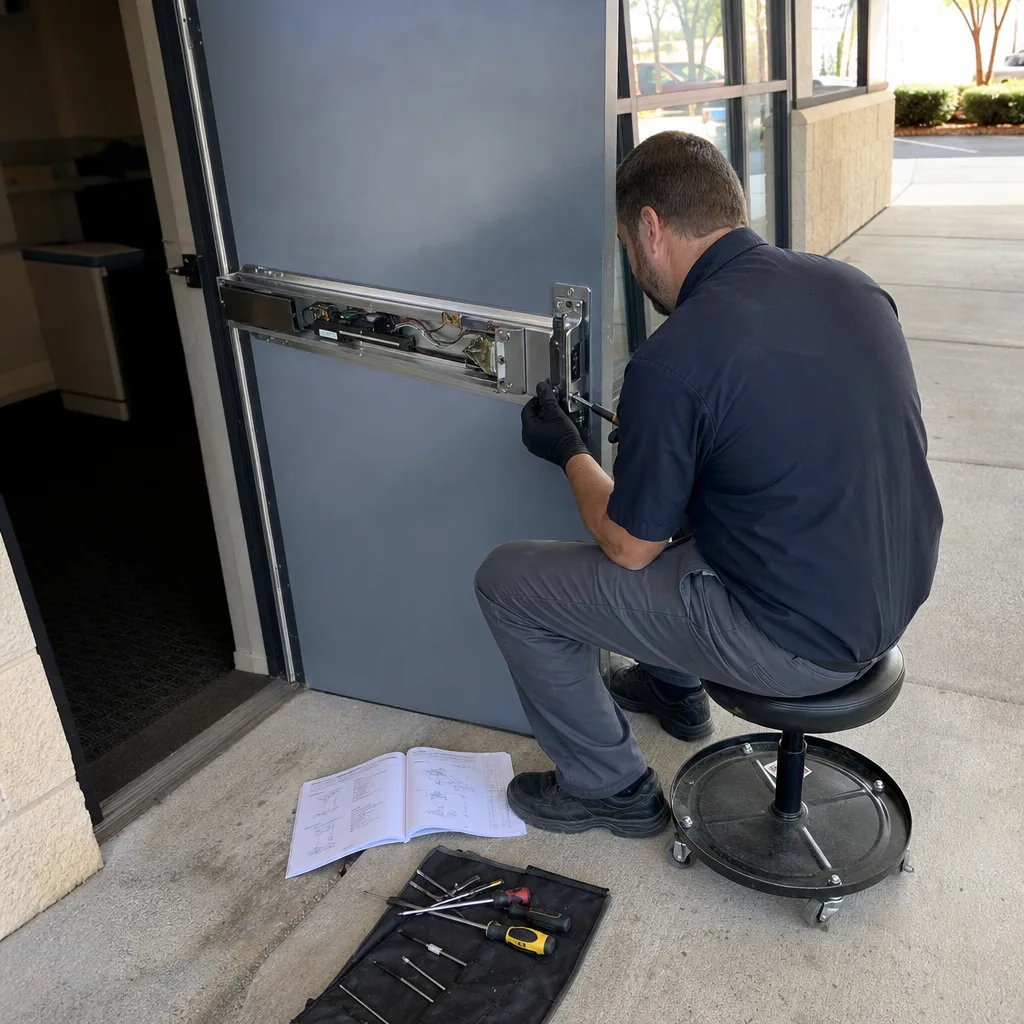
The Americans with Disabilities Act (ADA) is federal civil rights law, not a building code, but it is enforced through building inspections and private litigation. For commercial properties in Marietta, ADA compliance for door hardware is non-negotiable and carries significant liability exposure.
ADA Standards for Accessible Design, Section 404.2.7, specifies that operable parts of door hardware must:
- Be operable with one hand
- Not require tight grasping, pinching, or twisting of the wrist
- Be mounted no higher than 48 inches above the floor
- Require no more than 5 pounds of force to operate
This effectively prohibits round door knobs in public and employee areas of commercial buildings. Levers, push-type hardware, and U-shaped pulls are required. The lever must return to within 1/2 inch of the door face to prevent snagging on clothing or mobility aids.
In our work with Commercial Locksmith in Marietta clients, we regularly encounter non-compliant hardware in older buildings, particularly those constructed before 1992 when the ADA took effect. The liability exposure is real: private plaintiffs can file suit under Title III of the ADA, and the Department of Justice can assess civil penalties up to $75,000 for first violations and $150,000 for subsequent violations. Unlike building code violations, which are typically corrected through the inspection process, ADA violations can result in immediate litigation.
The Marietta business corridor along Cobb Parkway and the redevelopment areas near the Square have seen increased ADA scrutiny as property values rise and tenant turnover accelerates. We recommend a hardware audit for any commercial property built before 2010, documented with photographs and a written scope of required upgrades; use our Commercial Locksmith Maintenance Checklist for Marietta Homeowners to stay organized. This documentation becomes evidence of good-faith compliance efforts if a complaint is filed.
Brands we specify for ADA-compliant commercial installations include Yale (lever lines with certified operating force), Schlage (ND and L-series levers with ADA-compliant returns), and Baldwin (estate levers meeting both aesthetic and accessibility requirements). All are tested to the 5-pound force maximum and documented with manufacturer’s certification on request.
Fire-Rated Door Hardware: Why the Wrong Lock Voids the Rating
A fire-rated door is a tested assembly: the door slab, frame, hinges, lock, closer, and any glazing are certified as a system. Changing one component without verifying compatibility voids the rating. This is not a technicality; it is the central principle of fire door certification.
Fire door labels, found on the hinge edge of the door and sometimes the frame, indicate the rating in minutes: 20, 45, 60, or 90. The label includes a certification mark from a testing laboratory (UL, Intertek/Warnock Hersey, or FM Approvals). The hardware must bear a matching certification mark, indicating it was tested as part of a fire door assembly or as a standalone component for use in rated openings.
Common mistakes we find in Marietta:
- Installing a standard residential deadbolt on a 20-minute rated apartment entry door. The deadbolt lacks the fire-tested latch bolt and strike plate required to maintain the rating.
- Replacing a fire exit device with a standard panic bar. Fire exit hardware includes a latch retraction mechanism that allows the door to close and latch automatically; standard panic bars may not.
- Removing or disabling the door closer on a rated door. The closer is required to ensure the door closes and latches after opening, maintaining the barrier during a fire.
- Field-modifying hardware by drilling additional holes, which compromises the door’s tested integrity.
Cobb County enforces fire door requirements through the building inspection process for new construction and through fire marshal inspections for existing buildings. The Marietta Fire Department conducts annual inspections of commercial and multifamily properties, and fire door deficiencies are common citations.
For Access Control Systems in Marietta installations on fire-rated doors, the integration becomes more complex. Electric strikes, magnetic locks, and delayed egress systems must all be listed for fire door use and installed with proper power transfer and release mechanisms. We document every fire-rated installation with photographs of the original labels, the replacement hardware labels, and the completed assembly - this documentation is provided to the customer and archived under The Haven Standard.
How to Verify a Lock Installation Meets Code Without Calling the County Inspector
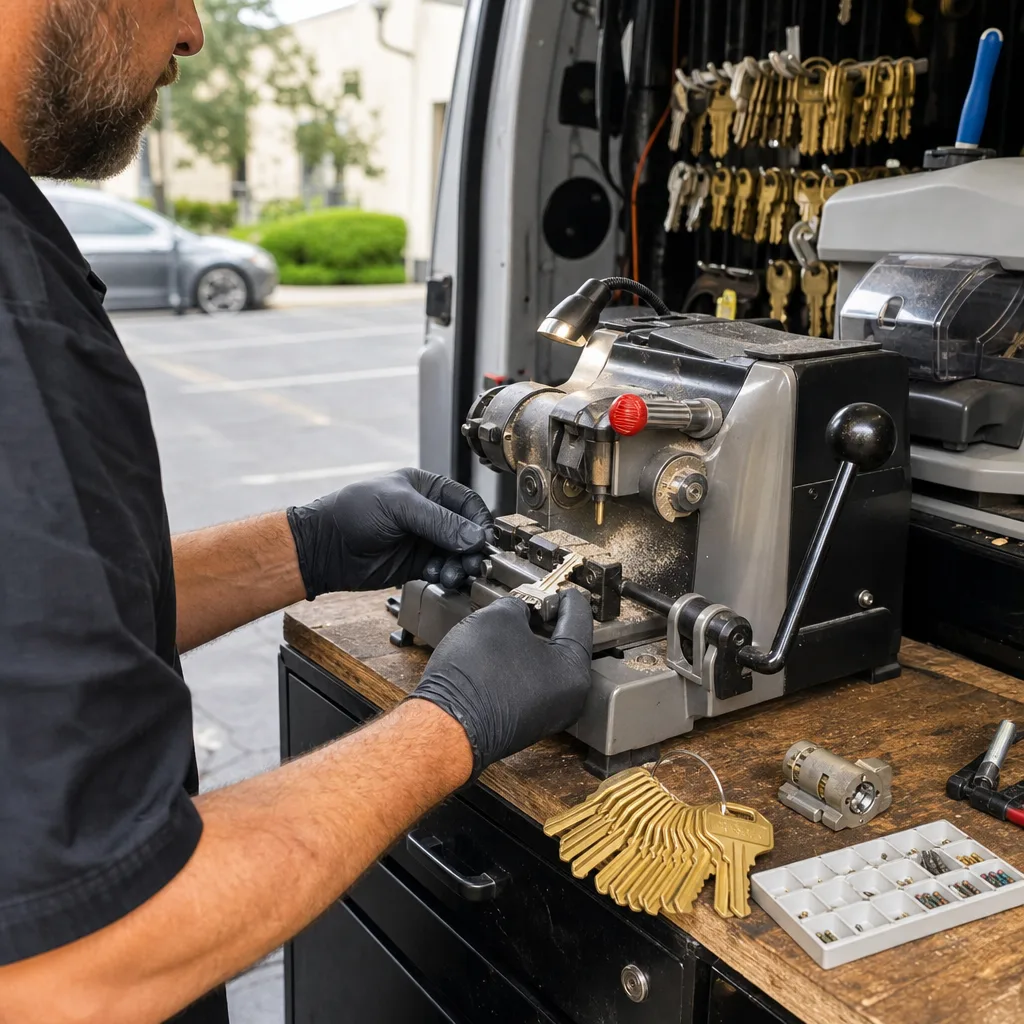
Homeowners and property managers can perform basic verification without scheduling an inspection. These checks catch most code violations before they become sale or safety issues.
Step-by-Step Verification for Residential Doors
- Check for free egress: Stand inside and operate the lock. If a key is required to unlock from the interior, the hardware is code-prohibited on a required egress door. Exception: double-cylinder deadbolts are permitted on doors with glass panels within 40 inches of the lock, provided an approved secondary release device is installed.
- Verify the grade: Look for ANSI/BHMA certification marks on the lock face or packaging. Grade 1 or Grade 2 should be visible. Grade 3 on an exterior door is substandard for Marietta’s climate and security expectations.
- Measure the backset and strike: The latch should engage the strike plate by at least 1/2 inch for Grade 2, 3/4 inch for Grade 1. A shallow engagement is a forced-entry vulnerability and a code deficiency.
- Inspect fire labels: If the door is in a multifamily building, hotel, or commercial occupancy, check the hinge edge for a fire label. If present, verify that the lock hardware has a matching fire certification mark.
- Document with photographs: Photograph the installed hardware, any labels, and the overall door assembly. This creates a record for insurance claims, property sales, and warranty service.
Commercial Verification
For commercial properties, add these checks:
- Levers, not knobs, on all public and employee doors
- Operating force test: the hardware should operate with light pressure, comparable to pushing a refrigerator door closed
- Panic hardware on egress doors serving assembly or high-occupancy areas - the push bar should extend at least half the door width
- Door closer function: the door should close and latch from a 90-degree opening without manual assistance
We leave a documented photo record with every customer at job completion, showing the installed hardware, grade certification, and any fire labels. This record is the customer’s verification tool - no inspector call required for routine confirmation.
Common Mistakes to Avoid
- Assuming “licensed and insured” means code-compliant. In Georgia, this phrase has no regulatory meaning for locksmiths. Verify insurance directly with the carrier, and ask for ANSI/BHMA grade specifications in writing.
- Installing double-cylinder deadbolts on primary egress doors. We see this frequently in Marietta’s older neighborhoods like Northwest Atlanta Street and Church Street, where homeowners prioritize security over egress. The fire risk outweighs the security benefit; use a Grade 1 single-cylinder deadbolt with a reinforced strike instead.
- Replacing fire-rated hardware with consumer-grade smart locks. The Ring, August, and Yale Assure lines are popular, but only specific models are fire-rated. Check the packaging for UL or Intertek fire certification before installation on rated doors.
- Ignoring ADA lever requirements in home-based businesses. A residence with a home office that receives clients becomes a commercial occupancy for ADA purposes. We’ve corrected this in the Indian Hills and Paper Mill Road areas where professional practices operate from converted residential spaces.
- Using Grade 3 hardware on exterior doors. The $29 lock set from a big-box store is Grade 3, rated for 400,000 cycles and minimal forced-entry resistance. In Marietta’s climate, the internal components corrode within 2-3 years, leaving the door vulnerable.
- Failing to document the installation. Without photographs and written specifications, proving code compliance at sale or after an incident is impossible. We provide this documentation as standard procedure, not an upgrade.
When to Call a Professional
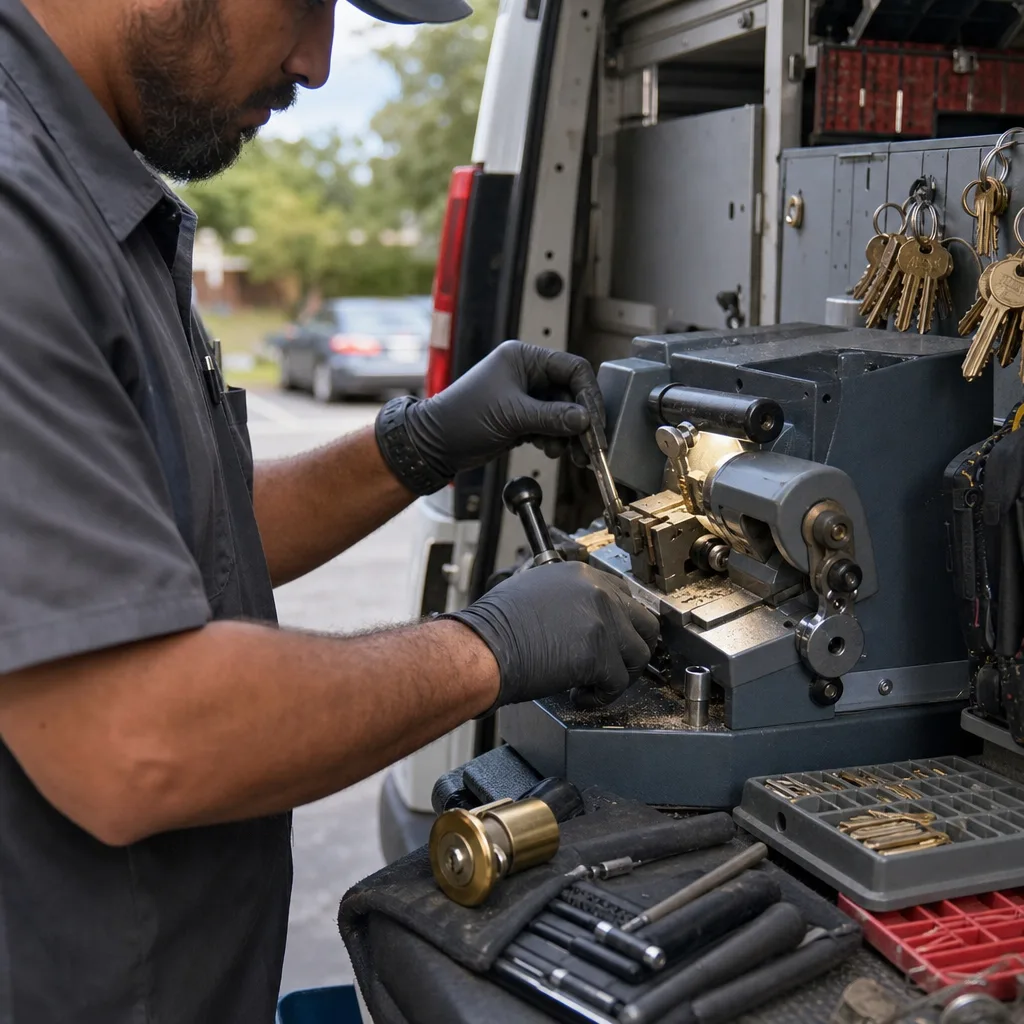
Call a qualified locksmith when the installation involves fire-rated doors, commercial occupancy, accessibility requirements, or any door that serves as a required means of egress. The cost of professional installation is typically recovered in avoided rework, liability protection, and property value preservation.
Specific scenarios that warrant professional involvement:
- New construction or addition requiring final inspection
- Condominium or apartment entry door hardware replacement
- Commercial space renovation or occupancy change
- Integration of access control with fire alarm or egress systems
- Historic district properties requiring preservation commission approval
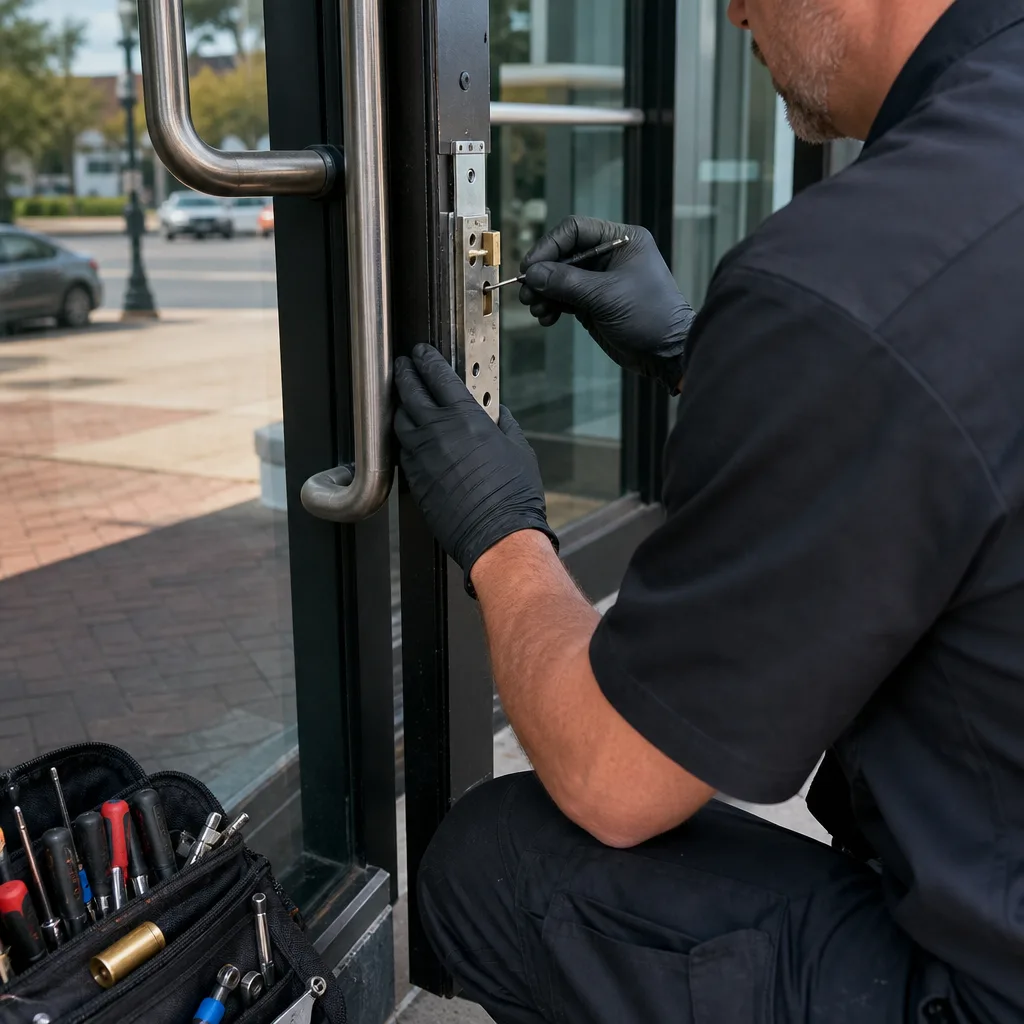
Residential Locksmith in Marietta services from Novak Lock & Security include code consultation as part of every installation quote. We identify permit requirements, specify compliant hardware, and provide the documented photo record that protects your investment. Free estimates are available throughout Marietta and Cobb County - call (762) 252-5919.
Frequently Asked Questions
No. Georgia does not require locksmiths to hold a state occupational license, pass an examination, or complete minimum training. In Marietta, locksmiths need only a general business license from the city or county. This makes consumer due diligence essential: verify insurance, request written specifications, and ask for documented work history before hiring.
Grade 2 residential deadbolt installation typically runs $180-280 per door, including hardware, labor, and documentation. Grade 1 commercial lever sets range from $320-550 depending on finish and function. Rekeying existing Grade 2 or Grade 1 hardware runs $19-35 per cylinder. We quote a firm price in writing before dispatch, per Haven Standard Clause 1, and that price appears unchanged on the invoice.
It will if the hardware meets the code in force at the time of original construction or current code if triggers apply. Single-family homes in Marietta generally need Grade 2 or better on exterior doors with free egress from the interior. Multifamily and commercial properties face additional requirements. We provide a compliance summary with every installation that you can present to inspectors or buyers.
Only if the smart lock is specifically listed for fire door use. Most consumer smart locks are not. The lock must bear a UL or Intertek fire certification mark matching the door’s rating. We stock and install fire-listed smart locks from Schlage and Yale for Marietta multifamily and commercial clients; call (762) 252-5919 for available models and pricing.
Private plaintiffs can file suit under Title III of the ADA, and the Department of Justice can assess civil penalties. In Marietta’s competitive commercial market, non-compliance also affects tenant attraction and retention. We recommend a documented hardware audit for any pre-2010 commercial building, with a written scope and prioritized upgrade plan.
We identify permit requirements as part of our installation consultation and provide the technical specifications and documentation needed for permit application. The property owner or their agent typically submits the application to Marietta Building Inspections or Cobb County, as permits are issued to the property owner. For commercial projects, we coordinate directly with contractors and architects to ensure hardware specifications meet submitted plans.
The Bottom Line
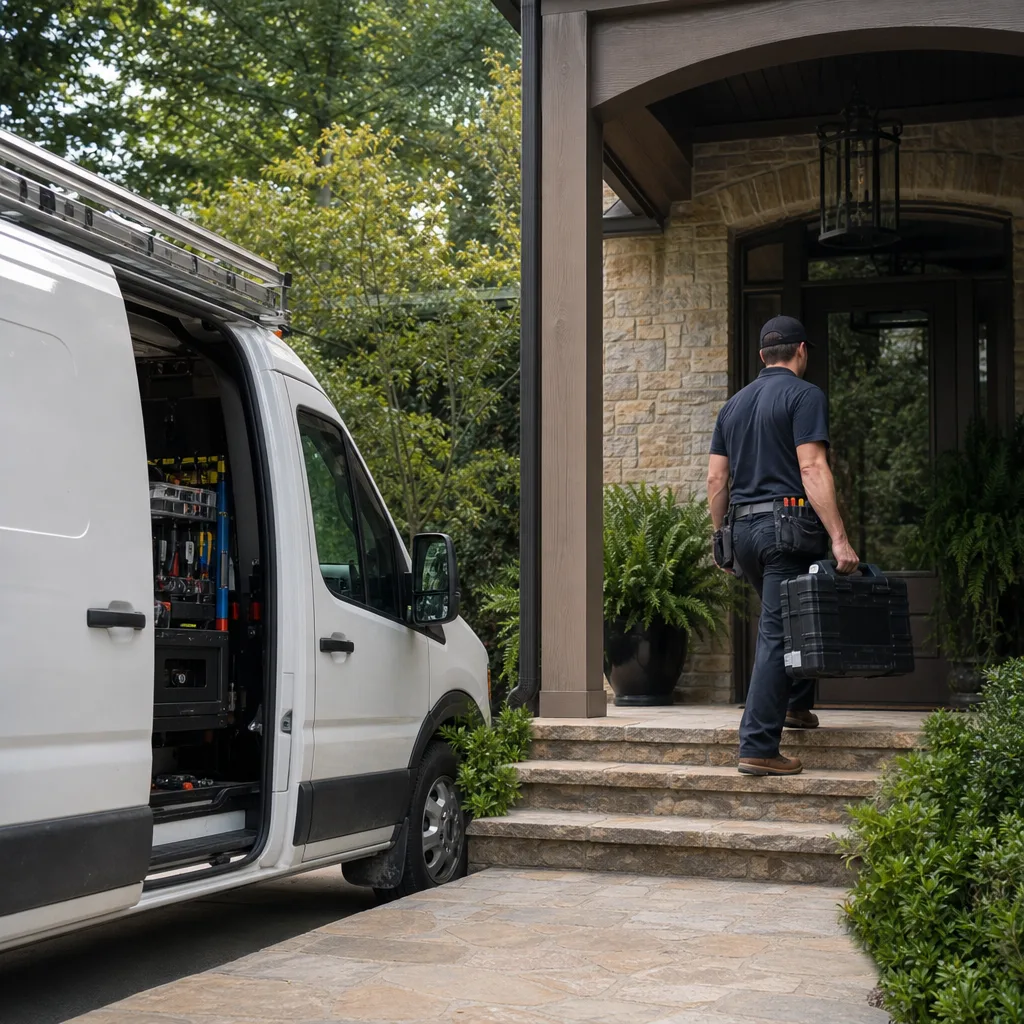
Georgia’s absence of statewide locksmith licensing shifts the burden to property owners to verify hardware compliance. In Marietta, the rules that matter are in Cobb County’s adopted building codes - egress requirements, ANSI/BHMA grades, fire-rated assembly standards, and ADA lever mandates. Most residential lock replacements don’t need a permit, but the hardware must still meet code. Commercial, multifamily, and fire-rated applications almost always require professional specification and often require permits. Explore more guides & resources on our blog. The verification tools are simple: free egress test, grade certification check, fire label inspection, and photographic documentation. We provide all four on every job, with a written price before we start and a documented record when we leave.
Written by Daniel Novak, Owner at Novak Lock & Security Marietta, serving Marietta since 2002.